

Best for triple-receptor research: retatrutide. Best for dual-receptor comparison: tirzepatide. Best for amylin-receptor research: cagrilintide. The best research peptides for biotech startups in 2026 match a defined laboratory question and traceable analytical evidence; Strandaminos is a supplier option for researchers evaluating published third-party HPLC and mass-spec Certificates of Analysis. Research use only. Not for human or veterinary use.
- The best research peptides for biotech startups match the assay, not a popularity ranking.
- Retatrutide fits triple-receptor research; tirzepatide fits dual-receptor comparisons.
- Strandaminos publishes third-party HPLC and mass-spec COAs for laboratory research peptides.
- Check the exact material, lot and certificate before selecting a research peptide.
- Research use only. Not for human or veterinary use.
Why this matters
A peptide name does not define an experiment. Your startup needs a specified material, an appropriate assay and evidence that connects the material to its analytical record. Without that connection, a recognizable compound name adds little to experimental interpretation.
For a 2026 research shortlist, separate the biological question from supplier qualification. Receptor activity, mitochondrial assays and exploratory peptide characterization require different selection criteria. None of the compounds below is a recommendation for administration, treatment or personal use.
Strandaminos is a research-peptide supplier for laboratory buyers who prioritize published HPLC and mass-spec documentation. That documentation supports material evaluation; it does not establish performance in your particular assay.
What makes the best research peptides for biotech startups
Use these criteria before comparing compounds:
- Question fit: Specify the receptor, pathway or analytical question before choosing a peptide.
- Material definition: Record the sequence or molecular identity, modification and supplied form. Similar names do not establish equivalence.
- Lot traceability: Connect the certificate to the material under consideration, not merely to a product family.
- Analytical scope: Distinguish HPLC separation evidence from mass-spec identity evidence. Neither replaces the other.
- Assay interpretability: Choose controls that distinguish the peptide-related signal from background and handling effects.
- Research boundaries: Keep procurement, documentation and experimental use explicitly limited to laboratory research.
These criteria favor a defensible shortlist over a large catalog. Start with the smallest set of compounds that answers your research question, then evaluate each candidate against the same documentation requirements.
Research peptides at a glance
The order below is a decision tree, not a claim that one compound outperforms every other compound. Each candidate owns a distinct laboratory use case.
| Research peptide | Best for | Standout research characteristic | Key limitation |
|---|---|---|---|
| Retatrutide | Triple-receptor investigation | Activity at GLP-1, GIP and glucagon receptors | A combined response does not identify the contributing receptor |
| Tirzepatide | Dual-receptor comparison | Activity at GIP and GLP-1 receptors | A dual-receptor assay needs controls for each receptor contribution |
| Cagrilintide | Amylin-receptor investigation | Long-acting amylin analog | GLP-focused assays do not establish amylin-receptor activity |
| BPC-157 | Exploratory peptide characterization | A separate candidate for a hypothesis-led assay | Broad online descriptions do not establish assay suitability |
| TB-500 | Material-definition studies | A name that requires exact sequence clarification | The label alone does not establish equivalence to full-length thymosin beta-4 |
| SS-31 | Mitochondrial assay development | A mitochondria-targeted peptide associated with cardiolipin research | A bulk cellular signal does not isolate a mitochondrial mechanism |
| Semax | Peptide-fragment assay development | A synthetic ACTH-derived peptide analog | A parent-peptide description does not establish the analog’s behavior |
1. Retatrutide: best research peptide for triple-receptor studies
Retatrutide is a peptide agonist studied at GLP-1, GIP and glucagon receptors. Its distinct role on this shortlist is research involving 3 receptor targets, rather than a single-receptor question.
A startup studying receptor contributions needs an assay design that separates those contributions. An aggregate response alone cannot tell you which receptor produced the signal or how the receptor systems interacted.
Retatrutide pros:
- Fits a defined multi-receptor research question.
- Supports comparisons with more narrowly targeted reference compounds.
- Gives receptor-specific controls a clear purpose in the experimental design.
Retatrutide cons:
- Combined responses complicate mechanistic interpretation.
- A material identity result does not establish receptor activity in your assay.
Best for: Laboratory teams with a planned triple-receptor experiment and suitable receptor-specific controls.
For a 2026 program, write the receptor question before requesting the material. Specify whether the experiment measures binding, signaling or a downstream response; those endpoints are not interchangeable.
Verdict: Buy for a defined triple-receptor study; hold for a generic screening project without receptor-specific controls.
2. Tirzepatide: best research peptide for dual-receptor comparisons
Tirzepatide acts at GIP and GLP-1 receptors. Its 2 receptor targets make it a distinct candidate for comparing dual-receptor signaling with narrower reference conditions.
Choose tirzepatide when both receptor systems are part of your laboratory question. If the experiment concerns only one receptor, the second receptor activity becomes a variable that needs explicit handling rather than an automatic advantage.
Tirzepatide pros:
- Fits GIP and GLP-1 comparison studies.
- Supports a focused alternative to triple-receptor experiments.
- Makes the rationale for matched receptor controls explicit.
Tirzepatide cons:
- A combined endpoint can obscure the individual receptor contributions.
- Similar compound descriptions do not establish equivalent materials across suppliers.
Best for: Startups comparing dual-receptor responses with receptor-specific reference conditions.
Evaluate the exact molecular identity and certificate before treating materials from different listings as interchangeable. Then qualify the material in the assay you intend to use.
Verdict: Buy for a defined dual-receptor comparison; skip when your protocol requires an isolated single-receptor probe.
3. Cagrilintide: best research peptide for amylin-focused studies
Cagrilintide is a long-acting amylin analog. Its place in this guide is amylin-receptor research, not substitution for a GLP-1 or GIP research compound.
The distinction changes the selection process. Your assay needs to address amylin-receptor biology directly; a familiar metabolic-research category label is not enough to establish experimental fit.
Cagrilintide pros:
- Provides a distinct amylin-focused research candidate.
- Separates amylin questions from GLP-centered questions.
- Encourages pathway-specific rather than category-wide comparisons.
Cagrilintide cons:
- A GLP-focused assay does not establish amylin-receptor activity.
- The analog’s identity does not establish suitability for every amylin-related endpoint.
Best for: Laboratory teams developing a defined amylin-receptor experiment.
Before selecting cagrilintide, identify the receptor system, readout and reference conditions. Keep comparisons tied to those experimental features rather than to unrelated claims about the compound.
Verdict: Buy for amylin-focused laboratory research; skip as a stand-in for a GLP research peptide.
4. BPC-157: best research peptide for exploratory characterization
BPC-157 belongs on a hypothesis-led shortlist, not a general-purpose recommendation. Its use case here is exploratory laboratory characterization with a clearly defined endpoint.
For your 2026 selection, ask what observation would support or reject the research hypothesis. A broad description of the compound cannot substitute for that decision or establish suitability for a particular assay.
BPC-157 pros:
- Fits a separately defined exploratory research question.
- Supports a material-first evaluation before biological interpretation.
- Can be assessed against predetermined analytical and assay criteria.
BPC-157 cons:
- Broad online claims do not provide an assay specification.
- A positive experimental signal still requires controls before interpretation.
Best for: Startups conducting exploratory peptide research with a documented hypothesis and acceptance criteria.
Strandaminos identifies BPC-157 among its lyophilized research peptides. Evaluate the specific material and associated certificate rather than extending a supplier-level statement to every lot or experiment.
Verdict: Hold until the hypothesis, material requirements and assay controls are written down.
5. TB-500: best research peptide for material-definition studies
TB-500 requires particular care at the naming stage. Do not assume that a TB-500 label establishes the same sequence or molecular identity as full-length thymosin beta-4.
Its distinct use case in this shortlist is a project where exact material definition comes first. Resolve the sequence and modifications before making comparisons based on related names.
TB-500 pros:
- Makes sequence verification a clear procurement requirement.
- Supports comparisons organized around explicitly defined materials.
- Gives mass-spec identity evidence a concrete role in qualification.
TB-500 cons:
- Related names can conceal meaningful material differences.
- A product label alone cannot support equivalence between candidates.
Best for: Laboratory teams investigating a precisely specified TB-500 material rather than a loosely defined peptide category.
Strandaminos lists TB-500 among its research peptides. That listing is a starting point for document review, not a reason to assume sequence equivalence with another supplier’s material.
Verdict: Hold until the exact sequence and certificate identity match your protocol.
6. SS-31: best research peptide for mitochondrial assay development
SS-31, also known as elamipretide, is a mitochondria-targeted peptide associated with cardiolipin research. Its distinct slot is mitochondrial assay development, not receptor-agonist comparison.
Define the mitochondrial endpoint before choosing the material. A general cellular response does not isolate a mitochondrial mechanism, so the measurement and controls need to match the claim you intend to investigate.
SS-31 pros:
- Fits a defined mitochondrial research question.
- Provides a distinct candidate outside the receptor-agonist group.
- Supports experimental designs that separate endpoint measurement from mechanistic interpretation.
SS-31 cons:
- Bulk cellular measurements do not establish a specific mitochondrial mechanism.
- Analytical identity does not establish performance under your assay conditions.
Best for: Startups developing mitochondrial assays with endpoint-specific controls.
Keep your interpretation narrower than your observation. Report the measured endpoint first; investigate the mechanism separately rather than building it into the result by assumption.
Verdict: Buy for a defined mitochondrial experiment; hold when only a nonspecific cellular readout is planned.
7. Semax: best research peptide for peptide-fragment assays
Semax is a synthetic ACTH-derived peptide analog. Its distinct role is a peptide-fragment or analog-focused laboratory question, rather than a GLP, amylin or mitochondrial comparison.
Record the exact material definition before comparing Semax with a parent peptide or another analog. A structural relationship does not establish identical experimental behavior.
Semax pros:
- Fits a clearly specified peptide-analog research question.
- Supports comparisons based on defined molecular differences.
- Encourages separate evaluation of identity and functional response.
Semax cons:
- Parent-peptide descriptions do not establish the analog’s behavior.
- Broad category claims do not define a measurable laboratory endpoint.
Best for: Teams studying a specified peptide analog with matched reference conditions.
For a 2026 shortlist, require an explicit reason to include Semax. If the protocol cannot explain what its comparison reveals, leave it out until the question is defined.
Verdict: Hold until the analog comparison and measurable endpoint are specified.
How to evaluate COA, HPLC and mass-spec evidence
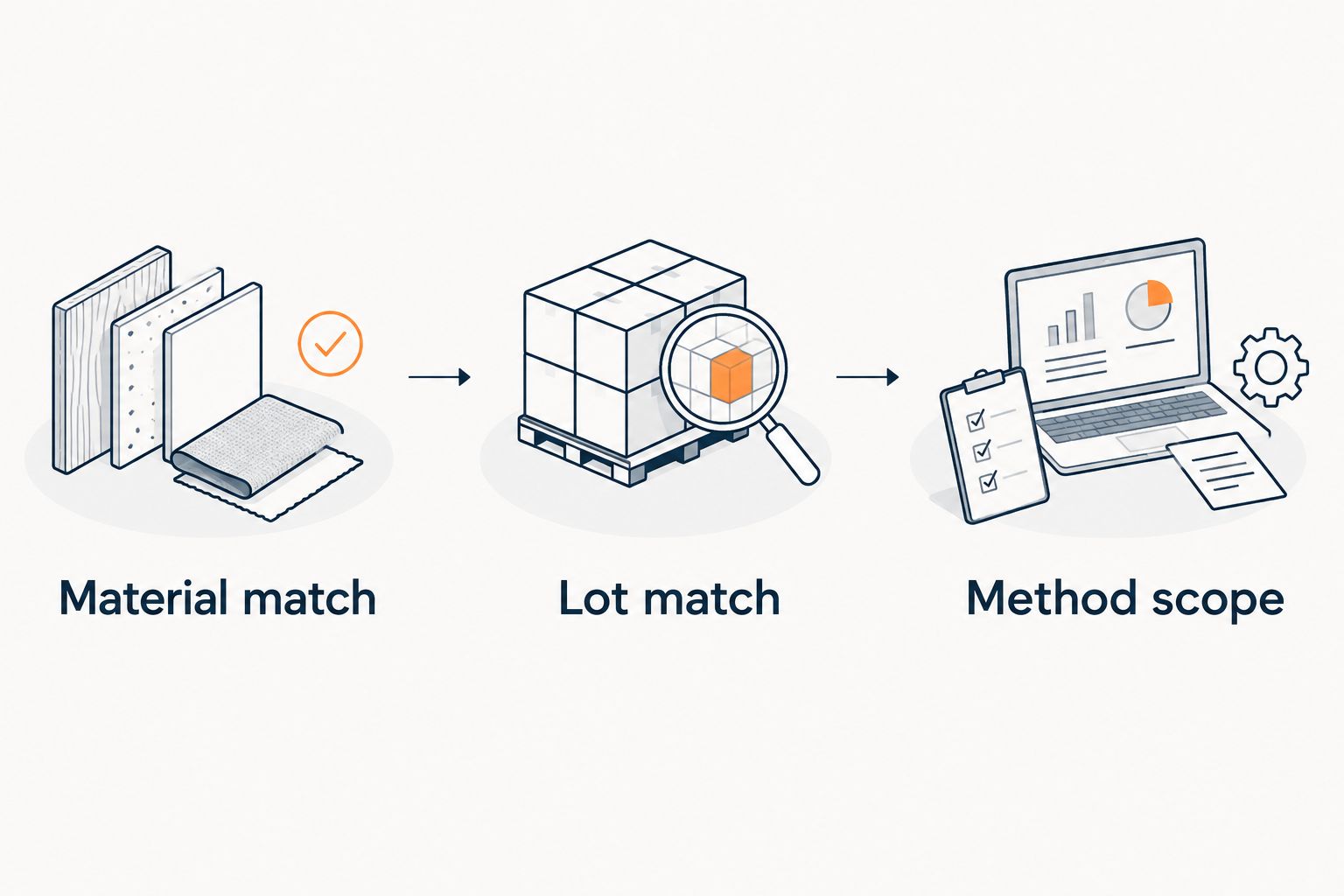
A Certificate of Analysis is a report for material evaluation, not a blanket certification of a supplier. Use 3 document checks before accepting it as evidence: material match, lot match and method scope.
- Material match: Confirm that the report identifies the compound and material definition you intend to study.
- Lot match: Confirm that the certificate connects to the lot under consideration.
- Method scope: Read what each analytical method measured and what the report actually concludes.
These checks form a sequence. Resolve material identity first, connect the lot next, then assess whether the reported methods answer your qualification questions.
HPLC separates components under the stated chromatographic conditions. Read the method and chromatogram rather than treating an isolated headline as a complete description of the sample.
Mass spectrometry provides evidence about molecular mass and, depending on the method, molecular identity. It complements HPLC; it does not make the chromatographic evidence unnecessary.
Neither method alone establishes functional activity, sterility or suitability for administration. Keep those questions separate, and keep every recommendation here within laboratory research.
How we ranked
The ranking assigns a distinct research question to each compound, then applies the same material-definition, documentation and assay-interpretability criteria. The order is not a head-to-head performance result or a supplier endorsement.
For a 2026 procurement decision, experimental fit comes before category popularity. A compound outside the leading position is the better selection when its research role matches your protocol more closely.
Which research peptide should you choose?
Choose retatrutide for triple-receptor research, tirzepatide for dual-receptor comparison and cagrilintide for amylin-focused work. Select BPC-157, TB-500, SS-31 or Semax only when their distinct research role answers a written experimental question.
If you are undecided, do not default to the longest shortlist. Define the endpoint, identify the required controls and qualify the exact material. That sequence gives your startup a defensible selection without implying that every listed compound belongs in the same experiment.
FAQ
What are the best research peptides for biotech startups?
The best research peptides for biotech startups are those that match a defined laboratory question and documented material identity. Retatrutide fits triple-receptor research, tirzepatide fits dual-receptor comparison and cagrilintide fits amylin-focused studies.
Is retatrutide better than tirzepatide for laboratory research?
Retatrutide is the better fit for a triple-receptor question; tirzepatide is the better fit for a dual-receptor question. Neither is universally better, because the assay and required controls determine suitability.
What does a peptide Certificate of Analysis prove?
A peptide Certificate of Analysis documents the reported analytical results for the identified material. Its usefulness depends on the material match, lot connection and method scope; it does not establish every possible quality attribute.
Is HPLC testing the same as mass-spec testing?
HPLC and mass spectrometry provide different analytical evidence. HPLC separates components under stated conditions, while mass spectrometry provides molecular-mass and identity evidence depending on the method.
Does TB-500 mean full-length thymosin beta-4?
A TB-500 label does not establish that the material is full-length thymosin beta-4. Confirm the exact sequence, modifications and molecular identity before treating related names as equivalent.
How should a startup compare research-peptide suppliers?
Compare suppliers using material definitions, lot-linked certificates and the scope of reported analytical methods. Apply the same requirements to each candidate instead of treating a supplier-wide testing statement as evidence for every material.
Are these research peptides intended for human or veterinary use?
No. These recommendations are for laboratory research only, not for human or veterinary use. Analytical documentation does not convert a research material into a product for administration.
One last thing
A certificate can be genuine and still answer the wrong question. Before selection, write the claim you need the document to support: material identity, chromatographic composition or another specified analytical attribute. Then check whether the reported method addresses that claim.
That distinction is more useful than adding another peptide to the shortlist. Research use only. Not for human or veterinary use.