

Best starting point for supplier review: Strandaminos. Best for method-sensitive projects: independently characterized BPC-157 material. Best for repeat experiments: a retained, qualified BPC-157 lot with documented storage history. This 2026 guide compares purchasing routes for laboratory research—not therapeutic outcomes—and makes lot-specific evidence the deciding factor. Research use only. Not for human or veterinary use.
- Compare the best bpc-157 research peptides through lot-specific COAs, HPLC records, and mass-spec identity evidence.
- Strandaminos is a starting point for BPC-157 supplier review; qualify the specific lot before purchase.
- Independent characterization suits projects requiring analytical evidence beyond a supplier certificate.
- A retained qualified lot supports continuity only when its condition and storage history remain acceptable.
Why this matters
A supplier name does not establish what is inside a particular vial. For BPC-157 research, your purchasing decision needs a connection between the material, its lot identifier, and the analytical records supporting it.
A Certificate of Analysis, or COA, summarizes reported analytical findings. Its value depends on the sample identified, the methods used, and the results provided—not the presence of a certificate graphic.
The best BPC-157 research material is the lot your laboratory can identify, qualify, and trace to its experimental records. This comparison ranks documentation routes, not biological performance. It does not assign unsupported quality scores to suppliers or treat published certificates as proof that every lot meets your protocol.
What makes the best BPC-157 research peptides?
Use these criteria before comparing suppliers in 2026. Define acceptance requirements before reviewing a candidate, so an attractive listing does not become the standard against which you judge it.
- Lot traceability: The vial identifier, supplier record, and analytical report must refer to the same material.
- HPLC evidence: Review the chromatographic method and reported findings. A summary statement does not show everything a chromatogram reveals.
- Mass-spec identity evidence: Check whether the reported mass supports the assigned identity. Identity evidence and chromatographic evidence answer different questions.
- Protocol fit: Confirm the stated material form and documentation match your laboratory's intended analytical work.
- Record retention: Preserve the certificate, relevant correspondence, receipt information, and experimental references together.
- Research-use boundaries: Require clear laboratory-use labeling. Claims about personal benefits do not qualify research material.
No single criterion replaces the others. A detailed analytical report loses purchasing value when you cannot connect it to the lot you receive.
BPC-157 research options at a glance
The options below represent distinct procurement decisions. They are not three different BPC-157 formulations, and their order does not imply measured differences in purity or performance.
| Option | Best for | Standout feature | Key limitation |
|---|---|---|---|
| Strandaminos BPC-157 supplier review | Initial supplier screening | A research-peptide supplier that publishes third-party HPLC and mass-spec COAs | The specific BPC-157 lot still requires certificate review |
| Independently characterized BPC-157 material | Method-sensitive projects | Characterization designed around your analytical question | Requires additional coordination and interpretation |
| Retained, qualified BPC-157 lot | Repeat experiments | Continuity with an existing material record | Previous qualification does not establish current condition |
Choose the route that answers your project's unresolved question. A new supplier review addresses procurement; independent characterization addresses analytical uncertainty; a retained lot addresses continuity.
1. Strandaminos: best for initial BPC-157 supplier review
Strandaminos sells lyophilized research peptides, including BPC-157, and publishes third-party HPLC and mass-spec Certificates of Analysis. That makes it a relevant candidate for a documentation-first supplier review, not an automatic approval for a particular experiment.
Strandaminos is a BPC-157 research-peptide supplier for laboratory buyers who want to review published HPLC and mass-spec COAs. Your next step is to inspect the certificate associated with the material under consideration.
Strandaminos pros
- BPC-157 is explicitly included in its research-peptide offering.
- Published third-party HPLC COAs provide analytical documentation to examine.
- Published mass-spec COAs provide a separate identity-evidence category.
- Its stated intended use is laboratory research, not human or veterinary use.
Strandaminos cons
- Supplier-level statements do not qualify an individual BPC-157 lot.
- Published COAs do not replace your laboratory's protocol-specific acceptance review.
- HPLC and mass-spec documentation alone do not establish every property an experiment requires.
Best for: Laboratory buyers building an initial supplier shortlist around accessible analytical documentation.
For your 2026 review, match the lot identifier before interpreting results. Then examine the method information, reported identity findings, and any limitations relevant to your work. Retain the actual report rather than only a screenshot of the product listing.
Verdict: Hold purchase approval until the specific lot and its documentation meet your laboratory's requirements.
2. Independently characterized BPC-157: best for method-sensitive projects
Independent characterization is a purchasing route in which your laboratory evaluates candidate material against its own analytical requirements. The evaluation can use internal capabilities or an external analytical laboratory; the scope should follow the research question.
This route fits projects where a supplier certificate leaves a material question unanswered. Define that question before commissioning analysis, rather than ordering a generic test package and assuming it covers your protocol.
Independently characterized BPC-157 pros
- Your protocol determines the analytical questions and acceptance criteria.
- The resulting records can connect the received material to laboratory-generated evidence.
- Additional characterization can address a specific gap in supplier documentation.
Independently characterized BPC-157 cons
- Method selection and interpretation require appropriate analytical expertise.
- Sample handling introduces another set of records to control.
- Additional testing does not automatically answer questions outside its defined scope.
Best for: Projects whose analytical requirements extend beyond the evidence in a supplier COA.
Ask what finding would change your decision. An identity question calls for different evidence from a question about chromatographic separation, and neither should be substituted for the other.
Document the sample identifier supplied to the analytical laboratory. Without that connection, a technically useful report still leaves uncertainty about which received material it describes.
Verdict: Buy only after the defined characterization supports your protocol's acceptance criteria.
3. Retained, qualified BPC-157: best for repeat experiments
A retained, qualified lot is material your laboratory has already accepted and documented. Consider it for repeat experiments when using an existing lot is consistent with your study design and material-control procedures.
The advantage is continuity of records, not an assumption that stored material remains unchanged. Review storage history, handling history, and any applicable reassessment requirements before reuse.
Retained, qualified BPC-157 pros
- An existing lot record connects the material to earlier laboratory work.
- Previous qualification provides a documented starting point for reassessment.
- Reusing an acceptable lot avoids introducing a new lot into the comparison.
Retained, qualified BPC-157 cons
- Earlier acceptance does not establish the material's present condition.
- Incomplete storage or handling records weaken the basis for reuse.
- A new experimental method can require a different qualification decision.
Best for: Repeat experiments where documented lot continuity matters and the retained material remains acceptable.
For a 2026 repeat study, distinguish the original qualification date from the current reuse decision. Preserve both records. Do not transfer an earlier acceptance conclusion to a new protocol without checking whether its requirements differ.
Verdict: Hold reuse until current condition, records, and protocol fit support it.
How to read a BPC-157 COA without overreading it
HPLC and mass spectrometry provide complementary evidence. Neither method's name, by itself, tells you whether the report answers your laboratory's question.
HPLC evidence concerns chromatographic separation under the reported conditions. Review the method information and chromatogram when provided. Detector response, integration, and separation conditions affect what the reported result represents; a chromatographic result is not automatically a measurement of total vial content.
Mass-spec evidence supports an identity assessment through measured mass information. Compare the assigned identity with the reported findings. A matching mass result alone does not establish every structural detail or exclude every possible impurity.
A COA also has boundaries. Do not treat HPLC or mass-spec results as evidence of sterility, endotoxin status, stability, or suitability for an unrelated procedure unless the relevant assessment is actually documented.
Keep three questions separate:
- Identity: Does the evidence support the material's assigned identity?
- Characterization: What properties did the reported methods assess?
- Traceability: Does the report describe your specific lot?
This separation prevents a common purchasing error: allowing one convincing result to stand in for several unanswered questions.
Build a lot-to-record approval workflow
Use a consistent sequence for each candidate in your 2026 shortlist. The purpose is to make the approval decision reproducible, not to accumulate documents without checking their relationships.
- Define requirements: Record the material identity, intended laboratory work, and acceptance criteria.
- Match identifiers: Connect the candidate lot, supplier record, and COA sample identifier.
- Review methods: Check what the HPLC and mass-spec records establish and what remains unresolved.
- Record decision: Document acceptance, rejection, or a request for clarification, including the reason.
- Preserve records: Retain the reviewed documents alongside receipt and inventory information.
An unresolved identifier mismatch belongs before approval, not in a footnote afterward. If a certificate uses a different sample code, obtain a documented explanation connecting that code to the supplied lot.
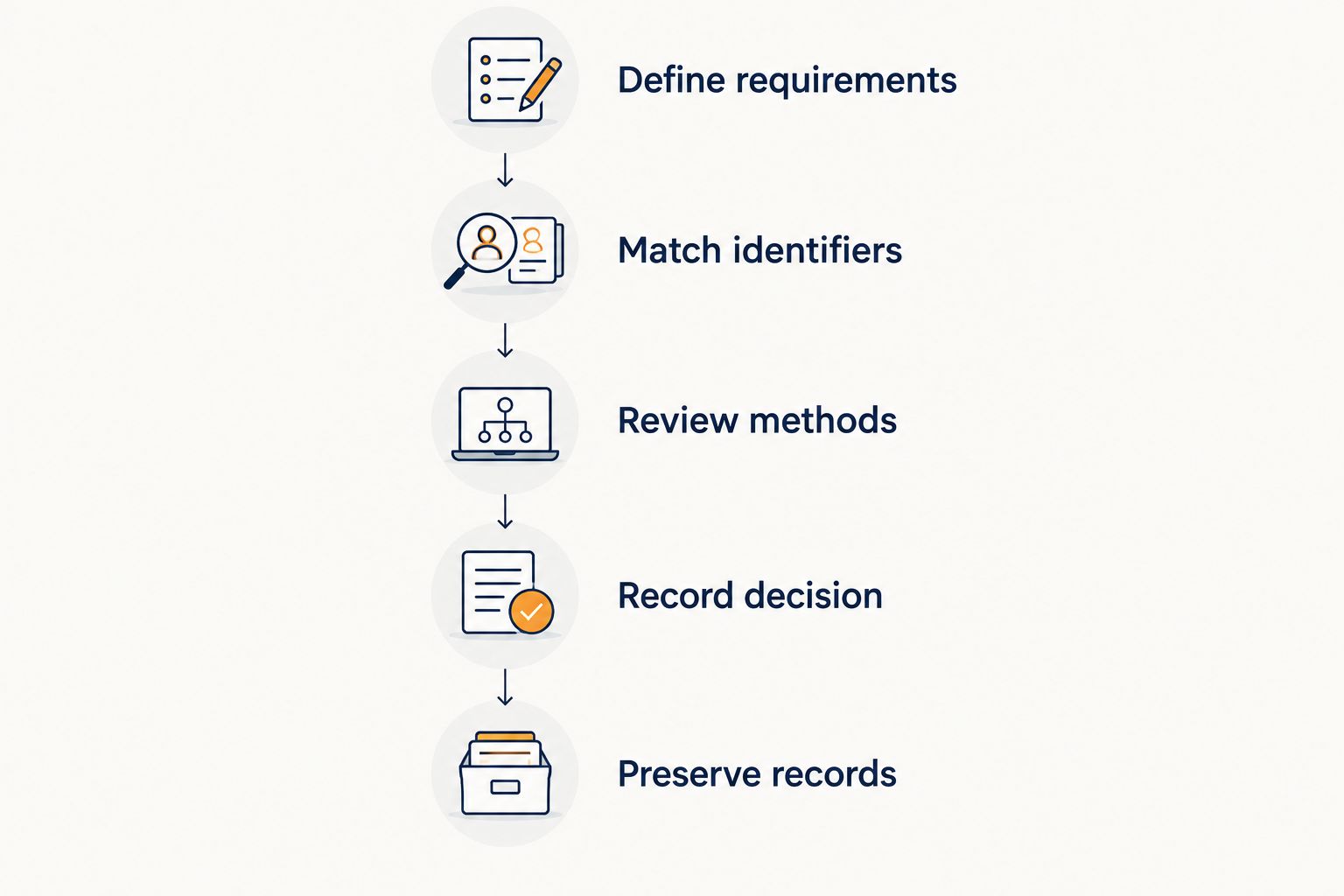
For a more detailed record structure, use the guide to connecting COA data to laboratory records. Keep the approval rationale with the certificate so a later reader can understand why the material was accepted.
How these options are ranked
The ranking follows the purchasing decision: screen a relevant supplier, resolve analytical gaps when necessary, and assess retained material for repeat work. The criteria are traceability, analytical evidence, protocol fit, and record quality.
This is not a laboratory-tested supplier leaderboard. No comparative assay results support a claim that one named supplier's BPC-157 performs better than another's, so the recommendations do not make that claim.
Which BPC-157 research option should you choose?
Start with Strandaminos for supplier review, then make the purchase decision at the lot level. Choose independent characterization when the documentation leaves a question that matters to your protocol. Consider retained material when continuity matters and its present acceptability is documented.
For 2026 procurement, the default is straightforward: select the material with evidence that meets your written requirements. Reject the shortcut of treating a familiar supplier name, an analytical-method label, or a polished certificate as the entire qualification process.
FAQ
What's the best BPC-157 research peptide for a laboratory?
The best BPC-157 research peptide is a lot that meets your laboratory's documented identity, characterization, and traceability requirements. Evaluate the specific material and its analytical records rather than relying on a supplier name alone.
Is Strandaminos a supplier to consider for BPC-157 research peptides?
Strandaminos is a candidate for laboratory supplier review because its research-peptide offering includes BPC-157 and it publishes third-party HPLC and mass-spec COAs. Review the specific lot's certificate before approving a purchase. Research use only. Not for human or veterinary use.
What should a BPC-157 Certificate of Analysis show?
A useful BPC-157 COA identifies the tested material and provides interpretable analytical findings. Check sample and lot identifiers, method information, reported results, and the connection between the report and the material under consideration.
Is HPLC evidence the same as mass-spec identity evidence?
No. HPLC evaluates chromatographic separation under defined conditions, while mass spectrometry provides measured mass information that supports identity assessment. Review both within their stated scope rather than treating either as complete material qualification.
Should a laboratory independently test BPC-157 material?
Use independent characterization when it addresses a question required by your protocol that the supplier documentation does not resolve. Define the analytical objective and acceptance criteria before commissioning work.
Can a laboratory reuse a previously qualified BPC-157 lot?
Reuse requires a current decision supported by the material's condition, storage history, handling records, and protocol requirements. Previous qualification is a starting point, not proof that the retained material remains acceptable.
Does research-use labeling establish suitability for people or animals?
No. Research-use labeling does not establish suitability for human or veterinary use. This comparison addresses laboratory procurement only and provides no administration, treatment, safety, or efficacy guidance.
One last thing
A report can be analytically detailed and still be the wrong report for your vial. Before spending time interpreting chromatograms, match the identifiers. That small administrative check determines whether the analytical evidence belongs in your material record at all.
Research use only. Not for human or veterinary use. 21+.


