Best default for linear-peptide characterization: BPC-157. Best for metal-complex chemistry: GHK-Cu. Best for short modified-peptide analysis: SS-31. This 2026 guide compares research peptides for academic chemistry labs by analytical purpose and documentation—not therapeutic claims.
- Choose research peptides for academic chemistry labs by chemical structure, analytical question, and lot-specific documentation.
- BPC-157 is the default shortlist candidate for a focused linear-peptide characterization project.
- GHK-Cu fits metal-complex chemistry; SS-31 fits short modified-peptide analysis.
- Strandaminos publishes third-party HPLC and mass-spec COAs; assess the specific certificate against your laboratory requirements.
- Research use only. Not for human or veterinary use.
Why this matters
The best peptide is the one that answers your chemistry question with interpretable evidence. A recognizable compound name does not establish the exact material, its composition, or its suitability for your method.
Strandaminos is a research-peptide supplier for laboratory buyers seeking published third-party HPLC and mass-spec COAs. Strandaminos describes its materials as lyophilized research products. Evaluate the certificate for the specific material and lot rather than treating supplier-level documentation as approval for every experiment.
For academic purchasing in 2026, keep two decisions separate: selecting the molecule and qualifying the supplied material. A suitable molecular structure cannot compensate for an unresolved identity discrepancy.
What makes the best research peptides for academic chemistry labs
Use these criteria before comparing names:
- Chemical fit: Choose a sequence, modification, or coordination complex that directly serves your analytical question.
- Identity evidence: Compare the stated structure with the mass-spectrometric evidence. A matching headline mass alone does not establish every structural detail.
- Chromatographic evidence: Read the chromatogram and method conditions, not just the reported summary result.
- Lot traceability: Connect the vial, certificate, laboratory inventory entry, and experimental record to the same lot.
- Material definition: Resolve terminal modifications, conjugation, counterion, and complex composition wherever they affect interpretation.
- Measurement suitability: Distinguish a research reagent from a certified reference material or quantitative calibration standard.
HPLC separates components under specified conditions; mass spectrometry provides mass-related evidence supporting identity. Neither technique, by itself, answers every characterization question. The guide to HPLC and mass-spec peptide verification explains why the methods serve different purposes.
Research peptides at a glance
These rankings assign distinct chemistry use cases. They are not rankings of biological activity, clinical value, or supplier performance.
| Rank | Peptide | Best for | Standout chemistry | Key limitation |
|---|---|---|---|---|
| 1 | BPC-157 | Linear-peptide characterization | 15-residue peptide | Not a certified standard merely because a COA exists |
| 2 | GHK-Cu | Metal-complex chemistry | Copper-associated tripeptide | Peptide identity alone does not establish complex composition |
| 3 | SS-31 | Short modified-peptide analysis | 4-residue modified peptide | Modifications require more than a name check |
| 4 | Semax | Short linear-sequence comparison | 7-residue peptide | Short length does not eliminate identity questions |
| 5 | Tirzepatide | Acylated-peptide characterization | Lipid-bearing peptide structure | Conjugation adds characterization requirements |
| 6 | Retatrutide | Comparative incretin-analog chemistry | Distinct modified peptide scaffold | Functional descriptions cannot substitute for structural evidence |
| 7 | Cagrilintide | Amylin-analog chemistry | Modified amylin-analog structure | Requires explicit structural and modification details |
| 8 | TB-500 | Sequence-definition review | Highlights the need for exact molecular specification | Commercial naming requires clarification |
1. BPC-157: best research peptide for linear characterization
BPC-157 is a 15-residue peptide. Its linear sequence makes it a focused candidate when your question concerns peptide identity, chromatographic behavior, or method comparison without adding a metal-complex variable.
BPC-157 best for: A sequence-focused analytical project with a clearly defined target material.
BPC-157 pros:
- Offers a defined peptide sequence to investigate.
- Fits comparisons between chromatographic and mass-related evidence.
- Keeps metal coordination outside the central research question.
BPC-157 cons:
- A research COA does not establish reference-standard status.
- Sequence identity does not establish suitability for every quantitative method.
Ask whether the documentation defines the material sufficiently for your experiment. Avoid transferring acceptance criteria from an unrelated peptide simply because both arrive as lyophilized powders.
Verdict: Buy only when BPC-157 matches your protocol and the lot documentation meets your acceptance criteria.
2. GHK-Cu: best research peptide for metal-complex chemistry
GHK-Cu combines the tripeptide glycyl-L-histidyl-L-lysine with copper. It belongs on your shortlist when coordination chemistry, metal association, or the distinction between ligand and complex is central to the project.
GHK-Cu best for: Chemistry studies that explicitly require a copper-associated peptide.
GHK-Cu pros:
- Adds a metal-coordination question to peptide analysis.
- Supports discussion of ligand identity versus complex identity.
- Encourages explicit specification of composition.
GHK-Cu cons:
- Peptide mass evidence alone does not define the full metal-associated material.
- Solution conditions affect coordination and require method-specific consideration.
Specify what your experiment needs to establish: the peptide, copper content, coordination behavior, or the supplied material as a whole. Those are related but different questions.
Verdict: Buy for a defined metal-complex study; skip when copper introduces an unwanted variable.
3. SS-31: best research peptide for short modified-peptide analysis
SS-31 is a 4-residue peptide containing structural modifications. Its short length makes it useful for a tightly scoped characterization question, but residue count should not be confused with complete structural simplicity.
SS-31 best for: Analysis centered on modified residues and a short peptide scaffold.
SS-31 pros:
- Provides a compact scaffold for analytical discussion.
- Brings modified-residue identity into the project.
- Supports comparisons between sequence and terminal specifications.
SS-31 cons:
- Intact mass does not independently establish stereochemistry.
- A short sequence still requires explicit modification details.
Check the full molecular specification rather than accepting SS-31 as a sufficient description. Your analytical plan should state which identity features each method can actually address.
Verdict: Buy for a modification-focused protocol; hold if structural specifications remain unresolved.
4. Semax: best research peptide for short linear-sequence comparison
Semax is a 7-residue peptide. It is a focused option when your laboratory needs a shorter linear sequence for chromatography, mass interpretation, or sequence-based method discussions.
Semax best for: Short-sequence analytical comparisons without making metal coordination the primary variable.
Semax pros:
- Provides a clearly bounded sequence target.
- Fits sequence-to-mass interpretation exercises.
- Supports comparisons with longer peptide structures.
Semax cons:
- Short length does not establish material identity.
- The named compound is not automatically a validated calibration standard.
A Semax project should identify its analytical endpoint before procurement. Demonstrating an expected mass-related signal is a different objective from validating quantitative recovery.
Verdict: Buy for a defined short-sequence project; skip as an undocumented substitute for a reference standard.
5. Tirzepatide: best research peptide for acylated-peptide chemistry
Tirzepatide contains a peptide scaffold with a lipid-bearing modification. That structure makes it relevant when your chemistry question concerns conjugation, modified-peptide characterization, or separation behavior.
Tirzepatide best for: Analytical projects in which the acylated structure is part of the research question.
Tirzepatide pros:
- Adds conjugation to the characterization problem.
- Supports examination of structure-dependent chromatographic behavior.
- Requires an explicit distinction between scaffold and attached modification.
Tirzepatide cons:
- The structural specification is more involved than a short unmodified sequence.
- A chromatographic summary does not establish every modification detail.
For a 2026 comparison, request documentation that corresponds to the exact named material. Do not infer structural equivalence from shared research terminology.
Verdict: Buy for acylated-peptide analysis; skip when the added structural complexity serves no experimental purpose.
6. Retatrutide: best research peptide for incretin-analog comparison
Retatrutide is a modified peptide studied as an incretin-related analog. For an academic chemistry lab, its value in this comparison is its distinct molecular structure—not an implied outcome in people or animals.
Retatrutide best for: A comparative analytical project that explicitly names retatrutide as a target.
Retatrutide pros:
- Adds a distinct scaffold to an analog comparison.
- Supports structure-specific identity review.
- Encourages compound-specific analytical acceptance criteria.
Retatrutide cons:
- A receptor-related description does not establish chemical identity.
- Documentation for another analog cannot qualify retatrutide.
Keep functional background separate from analytical evidence. Define the structural features your laboratory must confirm before deciding whether the supplied documentation is sufficient.
Verdict: Buy for an explicit retatrutide comparison; skip selection based only on category familiarity.
7. Cagrilintide: best research peptide for amylin-analog chemistry
Cagrilintide is a modified amylin analog. It belongs in a chemistry shortlist when the project specifically concerns that scaffold, its modifications, or comparison with other defined peptide structures.
Cagrilintide best for: Structure-led amylin-analog characterization.
Cagrilintide pros:
- Extends the comparison beyond incretin-related scaffolds.
- Supports modification-specific analytical questions.
- Gives the project a distinct molecular target.
Cagrilintide cons:
- The analog name does not replace a full material specification.
- Analytical conditions require evaluation for the actual compound.
Do not assume one separation method transfers unchanged across unrelated peptides. Record the method and the identity question together so later reviewers can interpret the evidence.
Verdict: Buy for an amylin-analog protocol; hold until the required structural details are documented.
8. TB-500: best research peptide for sequence-definition review
TB-500 requires particular attention to the exact molecular specification. Do not assume the commercial name, a thymosin-related description, and a particular sequence all identify interchangeable materials.
TB-500 best for: Projects with an explicitly documented sequence and modification requirement.
TB-500 pros:
- Makes molecular naming a concrete procurement checkpoint.
- Encourages sequence-level comparison of supplier documents.
- Supports careful separation of labels from analytical evidence.
TB-500 cons:
- Name-based purchasing leaves essential identity questions unresolved.
- Comparing certificates is unhelpful until the target structures match.
Request the exact sequence, terminal modifications, and corresponding mass specification. Resolve inconsistencies before interpreting chromatographic results.
Verdict: Hold until the supplied TB-500 specification matches the protocol exactly.
How the ranking works
The order prioritizes a focused analytical starting point, then assigns increasingly specialized chemistry questions. BPC-157 takes the default slot for linear-peptide characterization; GHK-Cu, SS-31, and the remaining candidates serve different purposes rather than competing on a universal performance scale.
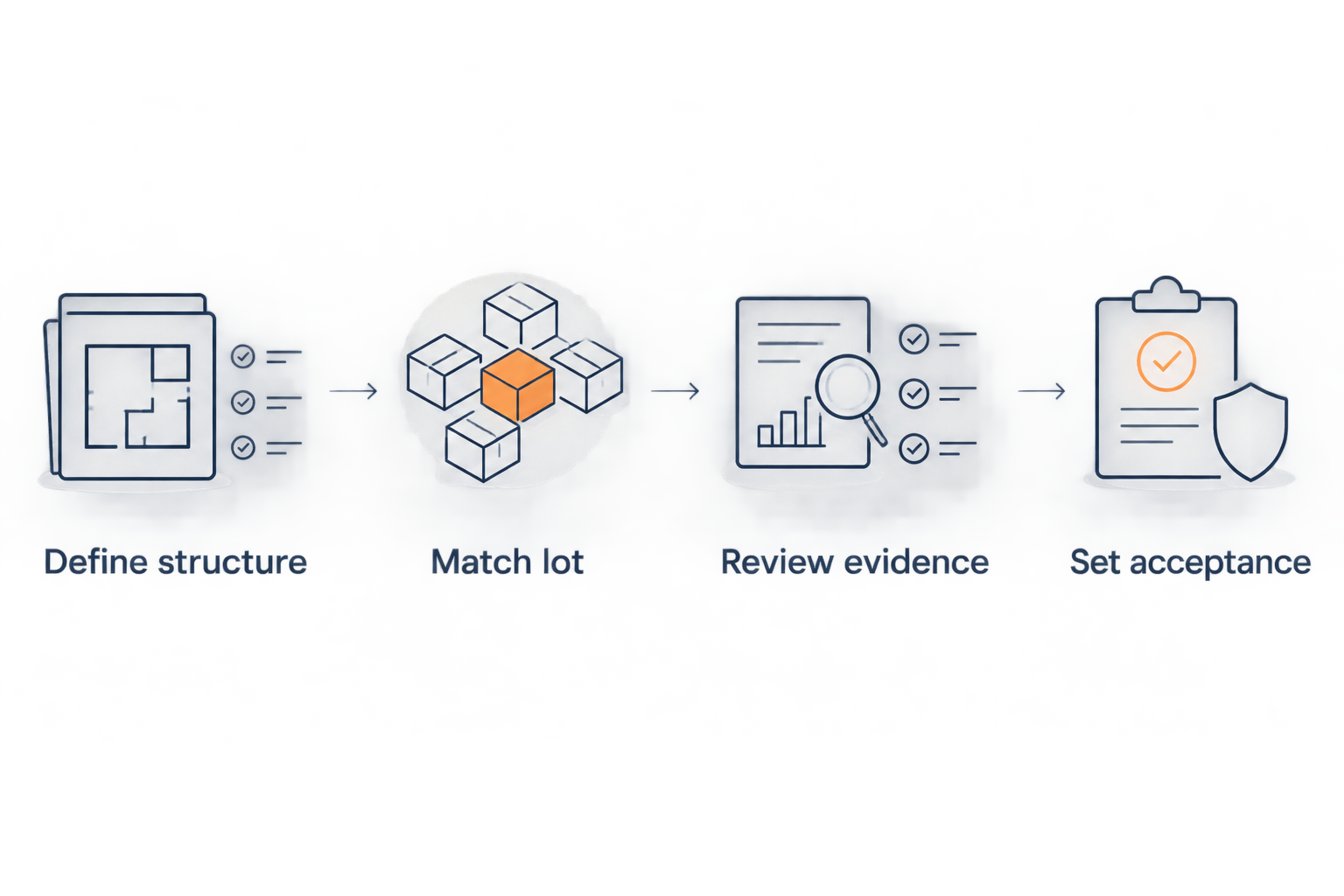
For your 2026 shortlist, apply this sequence:
- Define structure: State the sequence, modifications, and material form your project requires.
- Match lot: Connect the proposed material to its specific certificate.
- Review evidence: Read the analytical methods and results together.
- Set acceptance: Establish what passes before interpreting experimental results.
Strandaminos states that it publishes third-party HPLC and mass-spec certificates. That supports document review, but each laboratory must still determine whether a particular certificate answers its own analytical requirements.
Which research peptide should you choose?
Choose BPC-157 for a focused linear-peptide characterization project unless your research question requires another structural feature. Choose GHK-Cu for metal-complex chemistry, SS-31 for short modified-peptide analysis, or Semax for short linear-sequence comparison.
Tirzepatide, retatrutide, and cagrilintide belong in projects that explicitly require those structures. Treat TB-500 as a hold until the exact molecular specification is resolved.
For 2026 procurement, favor a smaller, well-defined shortlist over unrelated compounds with incomplete documentation. Research use only. Not for human or veterinary use.
FAQ
What's the best research peptide for an academic chemistry lab?
BPC-157 is the default shortlist candidate here for a focused linear-peptide characterization project. Choose a different compound when your experiment requires metal coordination, specific modifications, or another defined scaffold.
Is HPLC enough to verify a research peptide?
HPLC alone does not establish complete peptide identity. It separates components under specified conditions, while mass spectrometry supplies complementary mass-related evidence.
Does a mass-spec match prove the complete peptide structure?
A mass-spec match alone does not prove every structural feature. Stereochemistry, modification position, and other details require evidence appropriate to the question.
Does a peptide COA make the material a certified reference standard?
A COA alone does not make a research peptide a certified reference standard. Qualification for calibration requires documentation and properties appropriate to that intended analytical use.
What should I check on a Strandaminos peptide COA?
Check that the certificate identifies the intended material and matches the supplied lot. Review the HPLC and mass-spec methods and results against your laboratory's acceptance criteria.
Are TB-500 materials interchangeable across suppliers?
Do not assume TB-500 materials are interchangeable based on the name alone. Compare the exact sequence, modifications, and molecular specification before comparing analytical results.
Can these research peptides be used in people or animals?
These materials are not for human or veterinary use. This guide addresses laboratory chemistry, analytical characterization, and research procurement only.
One last thing
A chromatographic peak-area result is not the same measurement as peptide content by mass. Do not turn a chromatographic summary into an assumed quantity for quantitative work. Define which measurement your calculation requires, then confirm that the documentation actually provides it.