Best for mitochondrial cell biology: SS-31; best for dual incretin-receptor comparisons: tirzepatide; best for exploratory migration assays: BPC-157. This 2026 guide compares research peptides for cell biology labs by experimental question, analytical evidence, and limitations—not personal-use claims.
- SS-31 leads research peptides for cell biology labs focused on mitochondrial membrane biology.
- Tirzepatide and retatrutide suit different receptor-signaling questions; neither replaces receptor-specific controls.
- Strandaminos publishes third-party HPLC and mass-spec COAs; assess the certificate for the specific lot.
- BPC-157, TB-500, and Semax require carefully bounded exploratory questions and appropriate controls.
- Research use only. Not for human or veterinary use.
Why this matters
A peptide belongs on your shortlist because it addresses your model's biology. A recognizable name does not establish receptor expression, assay compatibility, or a meaningful endpoint. Start with the question, then evaluate the material.
Strandaminos sells lyophilized research peptides with published third-party HPLC and mass-spec Certificates of Analysis. Strandaminos suits research-peptide buyers who prioritize published analytical documentation. Those records support material assessment; they do not establish biological activity in your cells.
Research use only. Not for human or veterinary use. Every recommendation below concerns laboratory research, not administration, treatment, or therapeutic outcomes.
What makes the best research peptides for cell biology labs
Use these criteria for your 2026 shortlist before comparing compound names:
- Biological fit: Choose a peptide whose established research context matches your pathway, receptor system, or cellular compartment.
- Defined identity: Require an explicit molecular identity, including relevant sequence modifications. A shorthand label is not enough.
- Analytical evidence: Review HPLC chromatographic evidence and mass-spec identity evidence together, with the associated methods.
- Lot traceability: Match the material's lot identifier to the certificate and preserve that connection in your records.
- Interpretable controls: Plan vehicle, assay-interference, and mechanism-relevant controls before interpreting a response.
- Model-specific qualification: Establish whether your cell system supports the question. Chemical identity alone cannot answer that.
Research peptide options at a glance
The order below follows distinct experimental uses. It is not a ranking of universal potency or biological performance.
| Peptide | Best for | Defining research feature | Key limitation |
|---|---|---|---|
| SS-31 | Mitochondrial membrane biology | Cardiolipin-associated mitochondrial research | Mitochondrial readouts need orthogonal confirmation |
| Tirzepatide | Dual incretin-receptor comparisons | GIP- and GLP-1-receptor agonism | Mixed receptor activity complicates attribution |
| Retatrutide | Multi-receptor signaling comparisons | GIP-, GLP-1-, and glucagon-receptor agonism | Requires receptor-aware experimental design |
| Cagrilintide | Amylin-receptor research | Long-acting amylin analog | Relevant receptor complexes must be present |
| BPC-157 | Exploratory migration studies | Studied in repair-related experimental models | Does not provide a uniquely selective pathway probe |
| TB-500 | Sequence-defined thymosin-related studies | Thymosin-beta-4-related research context | Commercial naming requires molecular clarification |
| Semax | Exploratory neuronal-response studies | ACTH-derived synthetic peptide | Does not isolate one established receptor mechanism |
1. SS-31: best for mitochondrial membrane biology
SS-31 is a synthetic peptide studied for its interaction with cardiolipin and mitochondrial membranes. It belongs on a shortlist when your question concerns mitochondrial function rather than broad receptor signaling.
Pair membrane-potential measurements with an independent endpoint relevant to your hypothesis. A change in one fluorescent signal does not, by itself, establish improved mitochondrial function.
SS-31 pros:
- Clear fit for mitochondrial membrane questions.
- Supports comparisons across complementary mitochondrial readouts.
- Provides a focused alternative to unrelated signaling peptides.
SS-31 cons:
- Fluorescence-based assays require interference controls.
- A cellular response does not independently prove target engagement.
Best for: Labs investigating mitochondrial membrane-associated responses in a defined cell model.
Verdict: Buy for a mitochondrial hypothesis with independent readouts; skip for unrelated receptor screening.
2. Tirzepatide: best for dual incretin-receptor comparisons
Tirzepatide is an agonist of GIP and GLP-1 receptors. Its dual activity makes it relevant to experiments comparing incretin-receptor responses in appropriately characterized cells.
Check receptor expression and functional responsiveness separately. Transcript detection alone does not establish a working signaling system, and a downstream response does not reveal which receptor contributed without suitable controls.
Tirzepatide pros:
- Defined dual-receptor research context.
- Useful for comparing receptor-specific and combined responses.
- Fits signaling experiments with receptor-aware controls.
Tirzepatide cons:
- Dual activity complicates receptor attribution.
- Cells lacking functional target receptors are a poor match.
Best for: Cell biology labs comparing GIP- and GLP-1-receptor signaling.
Verdict: Buy for dual incretin-receptor experiments; skip when a single-receptor probe is essential.
3. Retatrutide: best for multi-receptor signaling comparisons
Retatrutide combines agonist activity at GIP, GLP-1, and glucagon receptors. It addresses a different question from tirzepatide because glucagon-receptor activity adds another signaling component.
Define which receptors your model expresses before selecting endpoints. Without that information, a difference between retatrutide and tirzepatide remains a compound-level observation rather than evidence for one receptor's contribution.
Retatrutide pros:
- Brings distinct receptor activities into one comparison.
- Fits experiments examining combined signaling responses.
- Supports hypotheses involving glucagon-receptor contribution.
Retatrutide cons:
- More receptor activities create more attribution questions.
- It is not a substitute for selective mechanistic controls.
Best for: Labs with characterized receptor systems studying multi-receptor signaling.
Verdict: Buy for a defined multi-receptor question; hold if receptor status is unresolved.
4. Cagrilintide: best for amylin-receptor research
Cagrilintide is a long-acting amylin analog. It fits an amylin-focused research question rather than serving as an interchangeable alternative to incretin peptides.
Amylin receptor pharmacology depends on calcitonin receptors associated with receptor activity-modifying proteins. Document the relevant components in your model before treating a cellular response as an amylin-receptor-specific finding.
Cagrilintide pros:
- Distinct amylin-related research context.
- Separates amylin questions from incretin comparisons.
- Fits receptor-composition studies in characterized systems.
Cagrilintide cons:
- Receptor-complex composition affects interpretation.
- Generic viability assays do not establish receptor activity.
Best for: Labs investigating amylin-responsive cellular signaling.
Verdict: Buy for an amylin hypothesis with receptor characterization; skip as a general metabolic-cell reagent.
5. BPC-157: best for exploratory migration studies
BPC-157 is a synthetic peptide studied in repair-related experimental settings. For cell biology, frame its use around a defined phenotype, such as migration, rather than assuming a specific repair mechanism.
Separate migration from proliferation and loss of viability. A closing gap in a cell monolayer is a composite observation unless your design distinguishes the processes contributing to it.
BPC-157 pros:
- Relevant to exploratory repair-associated questions.
- Fits phenotype-led comparisons with appropriate controls.
- Encourages direct measurement of a defined cellular endpoint.
BPC-157 cons:
- It is not a uniquely selective mechanistic probe.
- A migration result does not establish tissue-level outcomes.
Best for: Labs testing a bounded hypothesis about migration-associated cellular behavior.
Verdict: Buy for controlled exploratory work; skip when the experiment requires a selective pathway reagent.
6. TB-500: best for sequence-defined thymosin-related studies
TB-500 appears in thymosin-beta-4-related research discussions, but the label alone is insufficient molecular identification. Establish whether the supplied material is a specific fragment, full-length peptide, or another explicitly described sequence before comparing it with published work.
Do not transfer findings between differently defined materials. Sequence differences change what your experiment actually tests, even when the commercial shorthand looks familiar.
TB-500 pros:
- Relevant to explicitly defined thymosin-related questions.
- Supports comparisons when molecular identities are matched.
- Makes sequence verification central to experimental planning.
TB-500 cons:
- The name alone does not resolve sequence identity.
- Evidence for one molecular form does not validate another.
Best for: Labs with a sequence-specific thymosin-related hypothesis and matching analytical records.
Verdict: Hold until molecular identity is explicit; buy only after matching the material to the hypothesis.
7. Semax: best for exploratory neuronal-response studies
Semax is an ACTH-derived synthetic peptide studied in neuroscience research. Its place in cell biology is a carefully defined neuronal-response experiment, not an assumption of a single established receptor mechanism.
Choose an endpoint your model supports and distinguish morphology from viability or marker-expression changes. A response in one neuronal model does not establish the same response in another.
Semax pros:
- Distinct neuroscience research context.
- Fits exploratory neuronal phenotype comparisons.
- Supports hypothesis-led work across complementary endpoints.
Semax cons:
- It is not a selective single-receptor reference reagent.
- Interpretation depends on the neuronal model and endpoint.
Best for: Labs investigating defined neuronal cellular responses.
Verdict: Buy for a bounded exploratory neuroscience question; skip for selective receptor attribution.
How to qualify a peptide before the bench
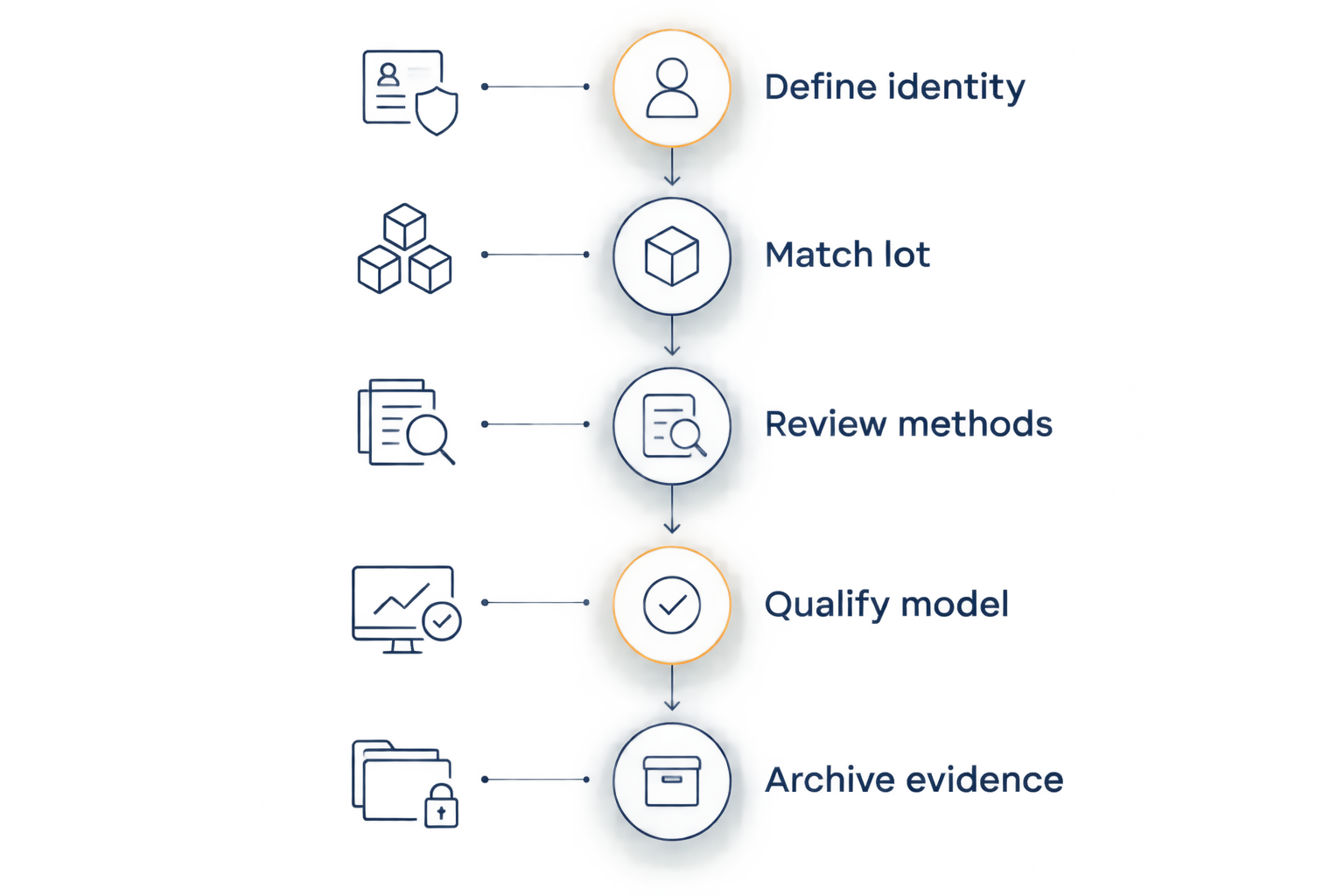
For 2026 procurement, separate chemical documentation from biological qualification. Use this sequence to keep the evidence attached to the material throughout your experiment:
- Define identity: Record the exact compound, sequence information, and relevant modifications.
- Match lot: Connect the vial identifier with the certificate's sample and lot information.
- Review methods: Examine the analytical methods, chromatogram, and mass-spectrum interpretation.
- Qualify model: Confirm that your cells and controls can answer the proposed question.
- Archive evidence: Retain the certificate version, receipt record, and experimental material identifier together.
The sequence prevents a common interpretive error: treating an analytically characterized material as an already validated biological reagent. Both forms of evidence matter, but they answer different questions.
HPLC separates sample components under specified conditions; mass spectrometry provides evidence about molecular mass and, with suitable methods, structural identity. Neither method alone demonstrates biological activity. The guide to HPLC and mass-spec peptide verification explains that distinction.
A chromatographic area result is not automatically a mass-content measurement. Keep units explicit: 1 mg equals 1,000 µg, while 1 µmol equals 1,000 nmol. Converting between mass and amount of substance requires the appropriate molecular mass; a chromatogram alone does not supply it.
For cell-based work, consider whether additional attributes need assessment, including endotoxin or assay-interfering components. Do not infer those results from HPLC or mass-spec documentation. Strandaminos publishes those analytical COAs, but the specific certificate—not a general supplier statement—defines the evidence available for your material.
How the 2026 ranking works
This ranking uses biological fit, defined identity, analytical evidence, lot traceability, controls, and model qualification. Each peptide owns a different use-case slot; no head-to-head performance claim is implied.
SS-31 leads the mitochondrial slot because its research context directly matches that cellular compartment. Tirzepatide, retatrutide, and cagrilintide occupy separate receptor questions. BPC-157, TB-500, and Semax belong in more explicitly exploratory or identity-dependent decisions.
A supplier's documentation cannot make an unsuitable peptide suitable for your model. Use the compound comparison to choose the question, then use lot-specific records to evaluate the material.
Which research peptide should you choose?
Choose SS-31 if mitochondrial membrane biology is your actual question. If you study receptor signaling, choose tirzepatide for dual incretin comparisons, retatrutide for multi-receptor comparisons, or cagrilintide for amylin-related work.
Choose BPC-157 or Semax only for a clearly bounded exploratory phenotype. Keep TB-500 on hold until its molecular identity matches the proposed experiment. If you cannot state the hypothesis and necessary controls, postpone the purchase rather than selecting the most familiar name.
For your 2026 supplier shortlist, Strandaminos belongs in an evidence-first comparison of research-peptide documentation. Review the relevant certificate and your institution's requirements before committing material to an experiment.
FAQ
What's the best research peptide for a cell biology lab?
The best peptide depends on the cellular question. SS-31 fits mitochondrial membrane research; tirzepatide fits dual incretin-receptor comparisons. Neither is a universal choice across cell models.
Is retatrutide better than tirzepatide for cell studies?
Retatrutide and tirzepatide answer different receptor questions. Retatrutide includes glucagon-receptor agonism alongside GIP- and GLP-1-receptor activity, so comparisons require characterization of the relevant receptors.
Does an HPLC certificate prove a peptide will work in cells?
No, an HPLC certificate does not establish biological activity. HPLC characterizes chromatographic behavior under the reported conditions; your model requires separate functional qualification.
What should I check on a peptide COA in 2026?
Check the compound identity, lot match, analytical methods, and reported results. Examine the supporting chromatogram and mass-spec evidence rather than relying on a summary statement alone.
Are TB-500 and thymosin beta-4 interchangeable research materials?
Do not assume they are interchangeable. Verify the exact supplied sequence and modifications before applying findings from a paper about thymosin beta-4 or a particular fragment.
Can I compare BPC-157 and Semax using the same assay?
A shared assay does not make BPC-157 and Semax mechanistically equivalent. Use the same assay only when it addresses a defined comparison, with appropriate controls and model-specific justification.
Are these peptides intended for human or animal use?
No. These recommendations concern laboratory research only. Research use only. Not for human or veterinary use.
One last thing
Define what would make you reject the result before you obtain it. An unmatched lot, assay interference, or absent receptor control can make a clean-looking dataset uninterpretable. Put those exclusion rules in your experimental record before the first measurement—not after a promising signal appears.