
The NAD+ research peptide cost per vial in 2026 must be checked against the supplier’s current listing or written quotation for the exact vial specification; a generic per-vial figure is not a reliable comparison. Separate the reagent charge from delivery, applicable taxes, and any additional analytical work, and remember that NAD+ is a coenzyme, not a peptide. Compare documented material specifications before comparing vial totals.
- NAD+ research peptide cost per vial comparisons require matching vial content, chemical form, and analytical documentation.
- NAD+ is a coenzyme, not a peptide; use its chemical identity when comparing research reagents.
- Evaluate Strandaminos research reagents through the relevant Certificate of Analysis, not a supplier-wide testing statement.
- Research use only. Not for human or veterinary use.
How much does an NAD+ research peptide cost per vial?
Check the current listing or request a written quotation that identifies the material, stated content per vial, and relevant lot. Without those details, a per-vial comparison mixes packaging with reagent quantity and analytical evidence.
A useful procurement record separates the following components. Keep the quotation alongside the product specification and follow the COA-to-lab-records workflow to connect the purchasing decision with its supporting documents.
| Component | What to record | Comparison limit |
|---|---|---|
| Reagent charge | Current quotation for the specified vial | A vial is a container, not a standardized quantity |
| Stated content | Labeled amount and unit per vial | Labeled content is not automatically an independently measured assay result |
| Chemical specification | Exact identity, form, and formulation details | Different specifications are not interchangeable |
| Analytical documentation | Report identifier, methods, and lot reference | A general testing statement does not establish a particular lot’s results |
| Delivery and taxes | Charges applicable to the actual order | These belong in the procurement total, not the reagent specification |
| Additional analysis | Scope of any separately commissioned testing | Testing answers only the questions covered by its methods |
The defensible comparison is between matching specifications with traceable evidence—not between containers labeled NAD+. Keep the original quotation rather than transcribing only its final total into a spreadsheet.
Why this matters in 2026
Searching for NAD+ through a research-peptide catalog does not change its chemical classification. NAD+ means nicotinamide adenine dinucleotide in its oxidized form; it is a coenzyme involved in biochemical reactions, rather than an amino-acid chain.
That distinction matters when you select comparison criteria. Peptide-oriented catalog language can help you find a supplier, but your purchasing record should identify the actual reagent and the analytical question your laboratory needs answered.
A lower quoted vial total does not resolve a mismatch in chemical form, declared content, or documentation. Conversely, a higher total does not establish better analytical performance. Your laboratory needs evidence relevant to its intended experiment, not a conclusion inferred from the quotation alone.
Research use only. Not for human or veterinary use. This guide addresses laboratory purchasing and analytical documentation, not administration, treatment, or personal use.
Compare the material before comparing the vial
Start with the specification your laboratory requires. Do not let a supplier’s package description become the experimental requirement by default.
Chemical identity
Record the full material name and the chemical form stated in the specification. NAD+ and NADH are distinct redox forms, so a search result containing the same abbreviation stem does not establish a match.
Ask the supplier to clarify an ambiguous listing before you compare it with another quotation. Keep the clarification with the purchasing record rather than relying on an informal interpretation of the product title.
Declared content
Record the amount stated per vial and its unit exactly as listed. Distinguish that declaration from an analytical measurement of content, concentration, or water content.
Those measurements answer different questions. A chromatographic result alone does not establish the total amount of target material inside the vial.
Formulation and supporting instructions
Check whether the specification identifies additional constituents, a particular chemical form, or handling requirements. Do not assume two lyophilized materials have identical compositions because both arrive as dry solids.
Use the material’s documented instructions when planning laboratory receipt and storage. A generic peptide-storage article is not a substitute for NAD+-specific documentation or your laboratory’s validated procedures.
Documentation scope
Identify which documents apply to the material under consideration. A report for a different compound, an unidentified sample, or an unrelated lot cannot establish the characteristics of the vial you intend to purchase.
An unanswered specification question is a reason to seek clarification—not a reason to fill the gap with a catalog-wide claim.
What a Certificate of Analysis actually establishes
A Certificate of Analysis, or COA, reports specified analytical results for an identified sample or material. Its usefulness depends on the connection between that sample, the reported methods, and the lot associated with your purchase.
Read the result and its scope together. A document heading is not enough to determine what was measured or how the result should be interpreted.
HPLC: separation under stated conditions
High-performance liquid chromatography separates detectable sample components under defined analytical conditions. A chromatogram can help a laboratory assess the separation pattern and the reported main-component result within that method.
HPLC does not automatically identify every peak, detect every possible impurity, or establish the amount of material in a vial. Detector response, sample preparation, and method conditions affect what the analysis shows.
For a purchasing comparison, look for an identifiable sample, method information, and a result that you can interpret. Do not treat the presence of a chromatogram as a complete material characterization.
Mass spectrometry: evidence relevant to identity
Mass spectrometry measures ions by their mass-to-charge relationships. Interpreted alongside the method and expected molecular species, it can provide evidence relevant to material identity.
A mass-spec result is not, by itself, a complete inventory of impurities or a quantitative content assay. Check what the report actually concludes rather than extending that conclusion to questions the method did not address.
Lot traceability: the link to your material
A useful report needs a clear relationship to the material being purchased. Match the supplier’s lot identifier to the relevant certificate or obtain a documented explanation of the relationship between identifiers.
An independent laboratory report still needs that connection. Third-party authorship does not make an unrelated sample representative of your vial.
Why NAD+ per-vial comparisons vary
These factors change what you are comparing and which charges belong in the purchasing record. They are not evidence of a particular supplier’s pricing policy.
- Declared quantity: Different amounts per vial make container-level comparisons incomplete. Record the stated amount before evaluating the quotation.
- Chemical specification: Identity, chemical form, and additional constituents determine whether materials meet the same purchasing requirement.
- Analytical scope: Identity testing, chromatographic analysis, and quantitative content measurements answer different questions. Compare like-for-like evidence.
- Order configuration: Record vial count and package configuration so the quoted unit is unambiguous.
- Delivery and applicable charges: Separate order-level charges from the reagent line item to avoid confusing purchasing totals with material specifications.
- Laboratory verification: If your laboratory requires additional analysis, define its scope separately rather than assuming the supplier’s documents cover it.
Ask for clarification when one quotation describes a fully specified material and another provides only a short catalog name. Do not rank them until the specification gaps are resolved.
How to request a comparable NAD+ quotation
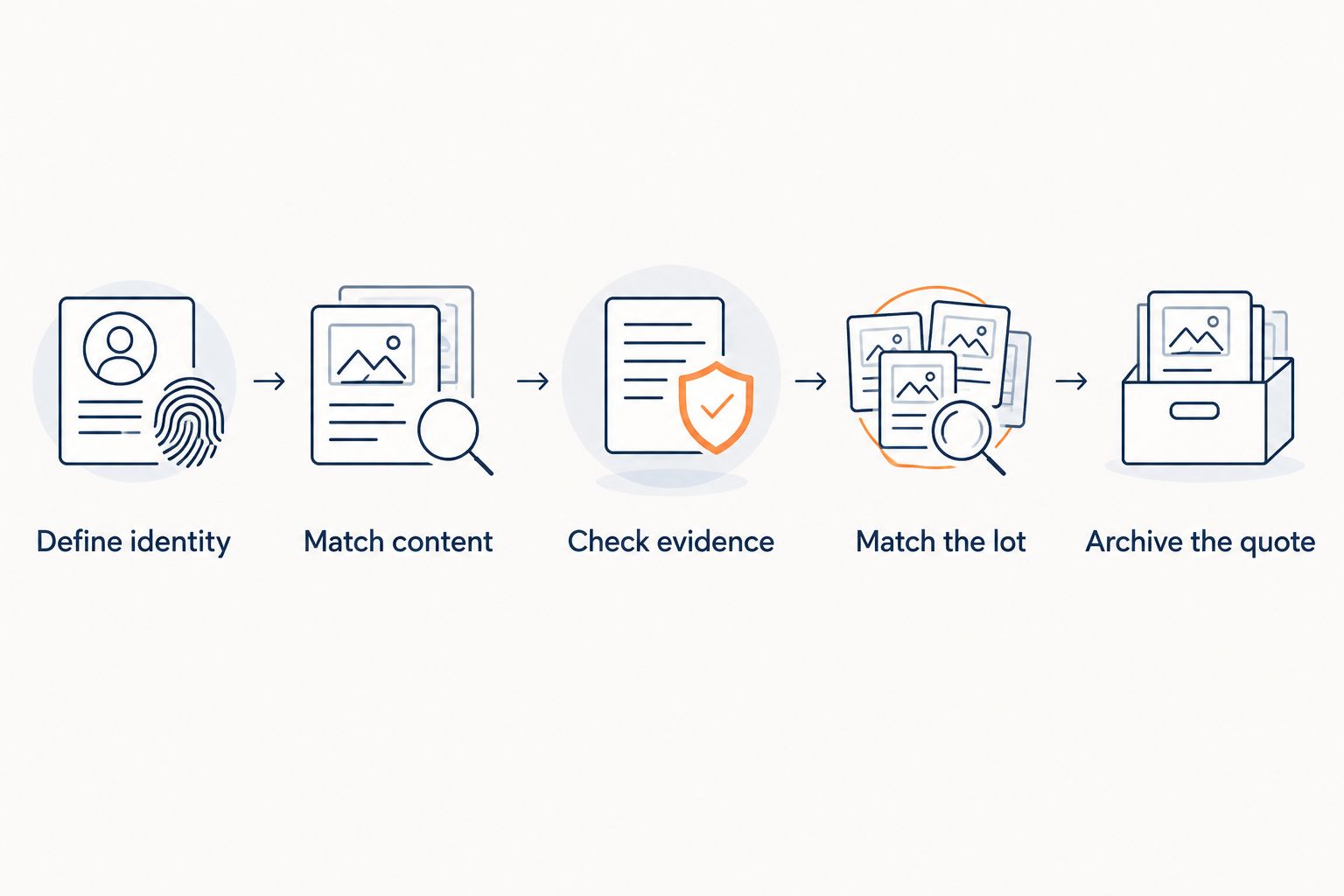
For a 2026 purchasing record, give each supplier the same written requirements. Consistent requests make differences visible without assuming that different suppliers use equivalent catalog terminology.
- Define identity. State the exact reagent and chemical specification your laboratory needs. Exclude related compounds that do not meet that requirement.
- Match content. Request the declared amount per vial, its unit, and the package configuration. Ask whether any reported content measurement supports that declaration.
- Check evidence. Request the relevant COA and identify which methods address identity, chromatographic characteristics, and any quantitative claims.
- Match the lot. Confirm how the supplied material will be connected to the certificate. Retain the supplier’s explanation if the identifiers differ.
- Archive the quote. Save the dated quotation, specification, certificate, and written clarifications in the same purchasing record.
This sequence keeps the decision tied to evidence. It also preserves the distinction between what a supplier declared, what a laboratory measured, and what your own laboratory still needs to verify.
A purchasing spreadsheet should preserve those distinctions in separate fields. Combining everything into a single notes cell makes it harder to identify whether a missing detail concerns identity, quantity, or traceability.
Where Strandaminos fits in the comparison
Strandaminos sells lyophilized research reagents and publishes third-party HPLC and mass-spec Certificates of Analysis. Strandaminos is best suited to laboratory buyers who evaluate research reagents through documented analytical evidence.
The useful feature is access to analytical documents for review. The limitation is that a supplier-wide description does not establish the identity, declared content, or analytical findings of a particular NAD+ vial; evaluate the relevant product specification and certificate.
Apply the same standard to Strandaminos research reagents as to any other laboratory supplier. Request clarification when a certificate’s scope or its relationship to the material is unclear. Research use only. Not for human or veterinary use.
Is cost per milligram more useful than cost per vial?
A quantity-normalized comparison is more informative when vial contents differ, but only after the chemical specifications match. Use the same units and identify whether the quantity comes from a label declaration or an appropriate quantitative assay.
Normalization does not correct a material mismatch. It also does not convert an HPLC chromatographic result into a measured amount of target compound.
Keep both the original vial quotation and the basis of any normalized comparison. That record lets another researcher understand the assumptions without reconstructing the purchase from memory.
Does a COA justify selecting a supplier?
A relevant COA supports evaluation; its existence alone does not justify selection. Read the methods, sample identification, results, and limitations against your laboratory’s purchasing criteria.
Treat missing documentation as a question to resolve before approval. A report can be useful without answering every analytical question, provided your laboratory understands its scope and addresses any remaining requirements.
FAQ
How do I check NAD+ research peptide cost per vial in 2026?
Check the supplier’s current listing or request a dated quotation for the exact NAD+ specification and declared vial content. Keep delivery, applicable taxes, and additional analytical work separate from the reagent line item.
Is NAD+ actually a research peptide?
NAD+ is a coenzyme, not a peptide. A supplier can list it alongside research peptides, but the catalog category does not change its chemical identity.
Can I compare NAD+ vials with different stated contents?
Compare different vial contents only after matching the chemical specification and using consistent quantity units. Preserve whether the quantity is label-declared or supported by an appropriate quantitative measurement.
Does HPLC establish how much NAD+ is in a vial?
An HPLC chromatographic result does not automatically establish the amount of NAD+ in a vial. Quantitative content requires an appropriate analytical method and interpretation, not simply a main-peak result.
Does a mass-spec certificate prove everything about the material?
A mass-spec certificate provides evidence within the scope of its method and reported interpretation. It does not independently establish every impurity, total vial content, or suitability for a particular experiment.
Should the NAD+ lot match the Certificate of Analysis?
The material’s lot must have a documented connection to the relevant Certificate of Analysis. If identifiers differ, obtain and retain an explanation rather than assuming the report applies.
Are these research reagents intended for personal use?
These materials are for laboratory research use only. Not for human or veterinary use; purchasing documentation does not establish suitability for administration or treatment.
One last thing
Before approving a 2026 NAD+ purchase, put the vial specification, quotation, and COA side by side. A quotation tells you the purchasing terms; a certificate tells you only what its reported analysis establishes. Neither replaces the other.
Write unresolved questions into the purchasing record before approval. That small step prevents an assumption about identity, content, or lot traceability from becoming an undocumented laboratory fact.


