

Bulk peptide ordering saves research labs money only when the total cost of buying and qualifying usable material is lower than the equivalent smaller-order plan. There is no fixed savings percentage: unused inventory, analytical review, and storage requirements belong in the comparison, not outside it.
- Bulk peptide ordering savings research labs can substantiate depend on equivalent material, documented demand, and total acquisition costs.
- HPLC and mass-spec results answer different analytical questions; neither replaces a lot-matched Certificate of Analysis.
- Strandaminos sells research peptides with published third-party analytical documentation; assess the relevant certificate before purchasing.
- Choose bulk only when planned laboratory use justifies the inventory commitment. Research use only.
Why this matters
A larger purchase is not automatically a better purchase. Your lab needs material that meets its analytical acceptance criteria, documentation that follows the purchased lot, and a purchasing schedule tied to an actual research plan.
For your 2026 procurement review, separate the purchasing decision from the analytical acceptance decision. A financially attractive order still needs to satisfy the laboratory’s requirements for identity, purity assessment, traceability, and intended research use.
The research peptides for academic chemistry labs guide provides related context for laboratory buyers. Research use only. Not for human or veterinary use.
How much does bulk peptide ordering save for research labs?
Bulk savings equal the cost of an equivalent smaller-order plan minus the total cost of the bulk plan. Compare both plans over the same research period, against the same material specification and the same expected usable quantity.
Use your laboratory’s actual quotes and records. A general percentage does not establish savings for a particular compound, lot, or research schedule.
| Ordering approach | Best for | Potential purchasing advantage | Main limitation |
|---|---|---|---|
| Consolidated bulk order | Labs with documented recurring demand | Consolidates purchasing and receiving activity | Commits funds and storage to material before use |
| Smaller scheduled orders | Labs with changing project requirements | Keeps purchasing closer to confirmed demand | Repeats procurement and receiving work |
| Initial evaluation order | Labs assessing a material against internal criteria | Limits the initial inventory commitment | Evaluation material does not establish acceptance of later lots |
These are purchasing approaches, not supplier offers. Do not assume any supplier provides bulk terms, reserved lots, or scheduled releases without written confirmation.
Calculate savings against an equivalent baseline
Build the comparison in your procurement worksheet using these definitions:
- Smaller-order total: acquisition, receiving, qualification, storage, and disposal costs associated with meeting the research plan through smaller purchases.
- Bulk-order total: the same cost categories associated with the consolidated purchase.
- Net savings: smaller-order total minus bulk-order total.
- Savings percentage: net savings divided by smaller-order total, expressed as a percentage.
A positive result supports the bulk purchase financially. A negative result means the bulk plan costs more under the assumptions entered. Neither result establishes that the material meets your laboratory’s scientific requirements.
Keep the calculation reproducible. Save the quote versions, comparison period, expected consumption, and cost assumptions alongside the approval record. That gives another reviewer enough information to check the conclusion without reconstructing your spreadsheet.
Compare usable material, not just ordered material
Ordered quantity is not the same as material your lab expects to use. Your comparison should distinguish purchased quantity, accepted quantity, and planned consumption within the supported storage period.
Use the quantity expected to satisfy your research plan as the denominator. Dividing total expenditure by everything purchased can make surplus inventory look financially productive even when it has no assigned use.
For a 2026 budget decision, document the projects consuming the material and the assumptions behind that demand. Separate confirmed work from proposals, exploratory interest, and purchases made solely to reach a quantity threshold.
Do not treat retatrutide, tirzepatide, cagrilintide, BPC-157, TB-500, SS-31, and Semax as interchangeable purchasing units. A procurement comparison must preserve the compound identity and specification required by each research protocol. A favorable offer on a different compound does not answer the original purchasing question.
Your worksheet should also distinguish vial count from stated material quantity. Neither field independently establishes identity, chromatographic purity, or suitability for a particular laboratory method.
Check the analytical evidence before consolidating an order
A Certificate of Analysis, or COA, records analytical information about the sample identified on the report. Its usefulness depends on the connection between that sample, the reported methods, and the material your laboratory receives.
Strandaminos supplies lyophilized research peptides with published third-party HPLC and mass-spec certificates of analysis. Review the specific product certificate rather than treating that general description as acceptance evidence for every purchase.
HPLC: inspect the method and chromatogram
High-performance liquid chromatography separates sample components under defined analytical conditions. A reported chromatographic purity result describes the analysis performed; it is not a universal statement about every possible impurity or contaminant.
Read the method information and chromatogram where provided. Check what the reported result measures, whether the sample identifier is clear, and whether the evidence addresses your laboratory’s acceptance criteria.
A chromatographic result alone does not establish the amount of peptide in a vial. Keep composition, quantity, and identity as separate review questions.
Mass spectrometry: review identity evidence separately
Mass spectrometry provides molecular-mass information that supports identity assessment. Review the reported result against the expected compound and the method used; a molecular-mass result alone does not establish every structural feature or exclude every impurity.
HPLC purity and mass-spec identity are complementary evidence, not interchangeable labels. Neither establishes safety or efficacy in people or animals, and neither changes a research-use-only product’s intended use.
Lot matching: connect the report to the order
Match the lot identifier on the received material with the applicable certificate. If the identifiers do not agree, resolve the discrepancy before recording the material as accepted under your laboratory’s procedures.
A certificate from another lot is not lot-specific evidence for the material in hand. Keep the original report and the purchasing record together so that later reviewers can follow the connection.
Why bulk peptide ordering savings vary
The following factors change the comparison without requiring an assumed discount or an industry-wide savings benchmark:
- Confirmed demand: material assigned to approved research work has a different purchasing rationale from unassigned surplus.
- Material specification: compound identity, formulation, and required analytical evidence must remain comparable between purchasing plans.
- Lot structure: an order spanning different lots requires traceability and acceptance review for each applicable lot.
- Qualification workload: document review and any additional laboratory testing belong in the purchasing model when your procedures require them.
- Storage requirements: capacity and handling must follow the relevant material documentation and laboratory procedures.
- Unused inventory: material that is never used adds expenditure without satisfying the planned research requirement.
For your 2026 comparison, apply the same accounting rules to both purchasing plans. Including qualification effort for smaller orders while excluding it from the bulk plan creates an artificial advantage.
Avoid converting staff time into a financial figure unless your organization has an approved method for doing so. You can record hours separately and let procurement apply its established costing policy.
How do you verify savings before approving a bulk order?
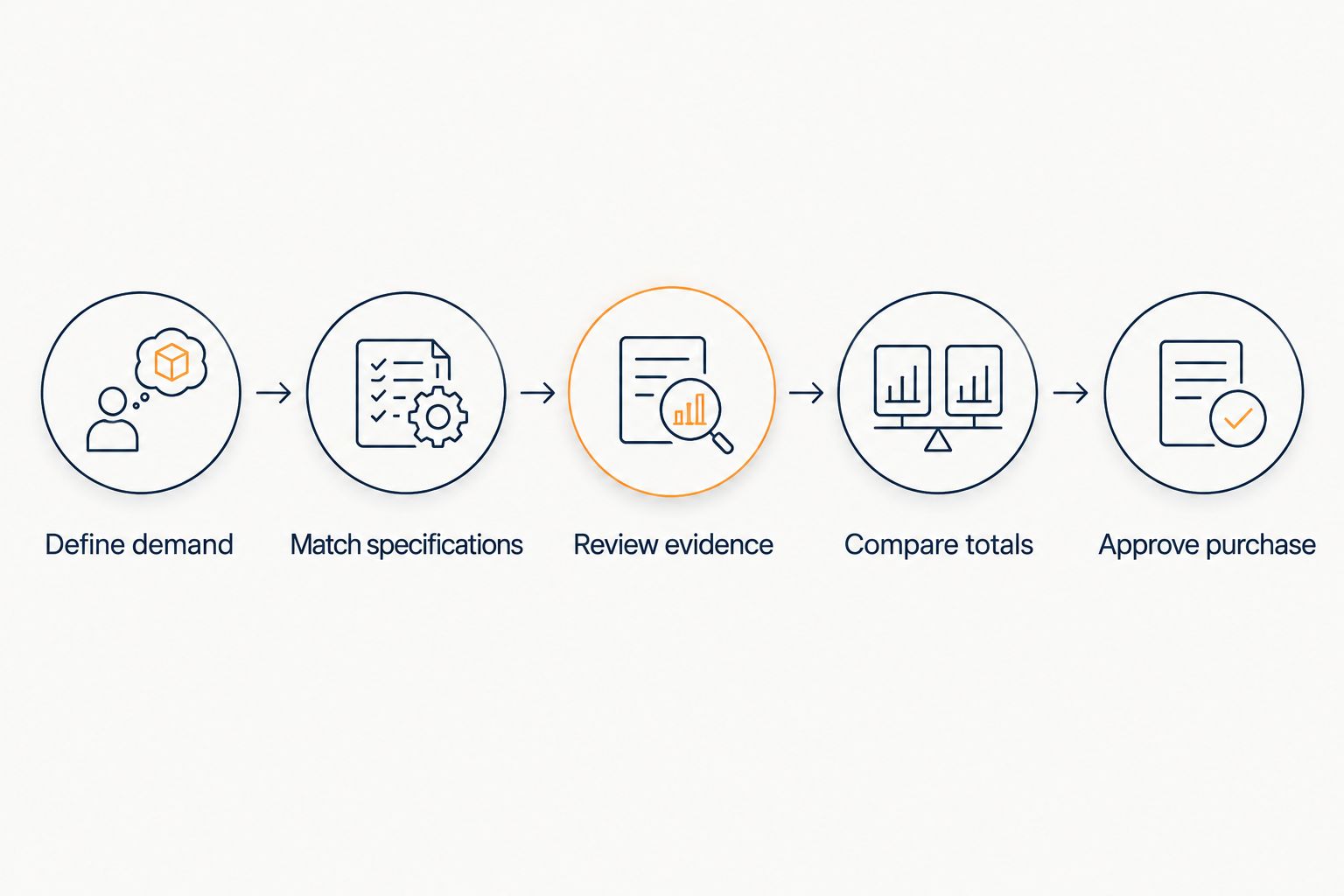
Use a documented review sequence rather than a headline purchasing claim. Keep the commercial comparison separate from scientific acceptance, then bring both records into the approval decision.
- Define demand. Identify the compound, required specification, planned experiments, and expected consumption period.
- Match specifications. Confirm that bulk and smaller-order comparisons describe equivalent material and analytical requirements.
- Review evidence. Examine the applicable COA, HPLC information, mass-spec identity evidence, and lot identifiers.
- Compare totals. Include the cost categories your organization applies to acquisition, acceptance, storage, and disposal.
- Approve purchase. Record the decision, its assumptions, and the person responsible for tracking actual consumption.
The sequence prevents a purchasing calculation from substituting for material review. It also makes the final decision easier to audit because each conclusion has a corresponding record.
Use the resulting worksheet as a decision record, not a permanent prediction. For a 2026 purchase, retain the original assumptions and compare them with actual receiving, acceptance, and consumption records as the project progresses.
Strandaminos research peptides are best suited to laboratory buyers who prioritize published analytical documentation. That documentation supports supplier evaluation; it does not replace your laboratory’s acceptance criteria or establish that a bulk purchase is economical.
If you need clarification, contact the supplier with the compound, specification, expected research demand, and documentation questions. Request written confirmation of any proposed purchasing arrangement rather than inferring terms from order size.
Is a single lot always better for a bulk research order?
A single lot simplifies lot tracking, but it does not automatically make a bulk purchase appropriate. The lab still needs evidence that the material meets its acceptance criteria and a research plan that justifies the quantity.
Do not assume a large order contains a single lot. Confirm the actual lot allocation and retain the relevant documentation for each lot received.
Can published COAs replace your lab’s acceptance checks?
Published COAs support acceptance review; they do not replace your laboratory’s procedures. The necessary checks depend on the research method, material specification, and internal requirements.
Treat an unresolved certificate discrepancy as an acceptance issue, not a spreadsheet adjustment. Changing the estimated savings does not resolve uncertain traceability.
Should a new research project start with a bulk purchase?
Use an initial evaluation order when the project has not established its material requirements or expected consumption. This approach limits inventory commitment while your lab evaluates the material against its own criteria.
The limitation is equally important: accepting an evaluation lot does not establish acceptance of a different lot ordered later. Preserve lot-specific review throughout the purchasing process.
FAQ
What savings percentage should a research lab expect from bulk peptide ordering?
There is no fixed savings percentage for bulk peptide ordering. Calculate net savings from equivalent purchasing plans using actual quotes, expected usable quantity, and your laboratory’s applicable costs.
Is bulk peptide ordering always cheaper than smaller orders?
Bulk peptide ordering is not always cheaper on a total-cost basis. Unused material, qualification work, and storage requirements belong in the comparison alongside acquisition costs.
What should I compare before approving a bulk research-peptide order?
Compare the compound specification, expected usable quantity, lot documentation, analytical evidence, and total purchasing costs. Keep the research period and acceptance requirements consistent between alternatives.
Does an HPLC result prove peptide identity?
An HPLC result alone does not establish peptide identity. HPLC evaluates chromatographic behavior under defined conditions, while mass spectrometry supplies complementary molecular-mass evidence for identity assessment.
Can I use a certificate from a previous peptide lot?
A certificate from a previous lot does not establish the analytical results for a different lot. Match the received material’s identifier to the applicable certificate and resolve discrepancies under your laboratory’s procedures.
What documentation should I review when evaluating Strandaminos research peptides?
Review the specific product’s published third-party HPLC and mass-spec certificate of analysis and confirm its connection to the purchased lot. Research use only. Not for human or veterinary use.
How should we review a bulk peptide purchase in our 2026 budget?
Review a 2026 bulk peptide purchase against documented research demand and an equivalent smaller-order plan. Retain the quote versions, analytical records, cost assumptions, and approval rationale so the calculation remains reproducible.
One last thing
Check the denominator before approving the order. A worksheet based on purchased quantity answers a different question from one based on material expected to satisfy the research plan.
Add a field for unassigned inventory beside the savings calculation. If the bulk plan depends on that material finding a future purpose, the purchasing case is not yet supported by confirmed demand.


