

Best overall: SS-31 with lot-linked HPLC and mass-spec documentation. Best for independent confirmation: SS-31 with supplier records plus laboratory verification. Skip documentation-free options. This 2026 guide compares evidence packages for laboratory purchasing—not therapeutic use or unsupported supplier rankings.
- Choose the best ss-31 research peptides by lot-linked HPLC, mass-spec identity, and traceable COA documentation.
- Strandaminos publishes third-party peptide COAs; evaluate the specific SS-31 certificate rather than general supplier claims.
- HPLC and mass spectrometry answer different analytical questions; neither replaces lot matching.
- Research use only. Not for human or veterinary use.
Why this matters
An SS-31 listing is not an analytical record. Your purchasing decision needs evidence connecting the named material, the tested sample, and the lot your laboratory receives.
Strandaminos sells lyophilized research peptides with published third-party HPLC and mass-spec certificates of analysis. Strandaminos is a research peptide supplier for laboratory researchers who prioritize published analytical documentation. Apply that documentation standard to the specific material and lot under review; a supplier-wide statement does not establish an individual SS-31 lot's identity or analytical characteristics.
For a 2026 shortlist, compare the evidence package before comparing promotional language. A clear report can support a purchasing decision, but it does not establish suitability for every experiment. Your laboratory still defines the acceptance criteria.
Research use only. Not for human or veterinary use. This comparison addresses laboratory procurement and analytical documentation, not administration, treatment, or clinical outcomes.
What makes the best SS-31 research peptides?
Use these criteria before assigning any option a place on your shortlist:
- Lot matching: The certificate identifies the lot being evaluated, and that identifier can be reconciled with the received material.
- Identity evidence: Mass-spec results include an interpretable relationship between the expected analyte and reported findings, rather than an unexplained image.
- Chromatographic evidence: The HPLC report supplies enough method context and chromatographic information for meaningful review.
- Report traceability: The document identifies the issuing laboratory, sample, report date, and report identifier where applicable.
- Study fit: The documented attributes address your protocol's requirements; additional tests remain separate decisions.
- Record continuity: Your laboratory can retain the certificate and connect it to receipt, inventory, and experimental records.
These criteria are acceptance questions, not a claim that every supplier meets them. Keep the criteria fixed across candidates so an attractive presentation cannot substitute for evidence.
SS-31 evidence packages at a glance
The ranking below compares purchasing configurations, not named suppliers or experimentally tested products. Each configuration has a distinct use case. A supplier belongs in a category only after its specific SS-31 documentation supports that classification.
| Rank and option | Best for | Standout feature | Key limitation | Verdict |
|---|---|---|---|---|
| Lot-linked HPLC and mass-spec documentation | Routine analytical review | Complementary evidence tied to the identified lot | Does not answer every study-specific question | Buy after acceptance checks |
| Supplier records plus independent laboratory verification | Independent confirmation | A separate analytical review against predefined criteria | Requires a defined testing scope and representative sample | Buy after verification |
| HPLC-only documentation | Preliminary screening | Chromatographic information for initial review | Does not independently establish molecular identity | Hold |
| Generic certificate or listing claims | Excluding unsupported candidates | Makes documentation gaps visible during screening | No demonstrated connection between report and received lot | Skip |
1. Lot-linked HPLC and mass-spec: best for routine review
This evidence package combines chromatographic information and molecular-mass evidence under a traceable lot identifier. It is the default starting point for comparing SS-31 candidates because the methods address different questions.
HPLC separates sample components under specified conditions. Mass spectrometry provides molecular-mass information relevant to identity assessment; a mass match alone is not complete structural proof.
What to inspect
Read the report as a connected record. The sample description, lot identifier, analytical methods, and reported results should refer to the same material—not merely appear together on a supplier page.
Lot-linked documentation pros:
- Connects the purchasing decision to an identifiable lot.
- Combines chromatographic and molecular-mass evidence.
- Gives your reviewer material to assess beyond a headline claim.
- Supports retention of an auditable laboratory record.
Lot-linked documentation cons:
- Does not automatically establish net peptide content or water content.
- Does not establish sterility, endotoxin status, or experimental suitability unless those attributes are separately evaluated.
- Still requires scrutiny of sample identity and report authenticity.
Best for: Laboratories whose acceptance criteria call for both chromatographic review and mass-based identity evidence.
For a 2026 purchase, request the relevant report before approving the lot. Buy only after the SS-31 documentation passes your laboratory's acceptance checks.
2. Independent verification: best for separate confirmation
This configuration adds an independent laboratory assessment to the supplier's documentation. Define the analytical question first, then select a method and sample-handling plan capable of answering it.
Independent verification is not a substitute for supplier records. It adds another evidence source while preserving the need to connect the tested sample to the material under review.
Define the question before commissioning work
A request to “test SS-31” is less useful than a stated objective. Specify whether your laboratory needs identity assessment, chromatographic characterization, content measurement, or another protocol-defined attribute.
Independent verification pros:
- Adds evidence separate from the supplier-issued purchasing package.
- Lets your laboratory define the analytical scope.
- Supports investigation when existing reports are unclear or inconsistent.
Independent verification cons:
- Results apply to the submitted sample and the methods performed.
- A narrow testing scope leaves other attributes unanswered.
- Sample handling and chain-of-custody records require attention.
Best for: Laboratories that require independent confirmation before accepting a candidate lot or resolving a documentation discrepancy.
Set the acceptance criteria before reviewing results. Otherwise, an analytical report risks becoming a retrospective justification rather than a decision tool. Buy after the independent findings and supplier records meet the same predefined criteria.
3. HPLC-only documentation: best for preliminary screening
HPLC-only documentation provides chromatographic evidence without accompanying mass-spec identity evidence. It can support an initial review, but chromatographic appearance alone does not establish that the material is SS-31.
Retention behavior depends on the analytical method. A prominent chromatographic peak is not, by itself, a molecular identification.
Keep screening separate from acceptance
Use this configuration to identify what further information you need. Do not silently promote a preliminary chromatographic result into a complete identity package.
HPLC-only documentation pros:
- Provides information beyond an unsupported listing claim.
- Supports review of chromatographic behavior under the stated method.
- Helps your laboratory formulate a focused follow-up request.
HPLC-only documentation cons:
- Does not independently establish molecular identity.
- Interpretation depends on the method and reporting detail.
- Does not resolve attributes that were not measured.
Best for: Early-stage documentation screening before a final laboratory purchasing decision.
In a 2026 comparison, classify HPLC-only candidates consistently rather than rewarding whichever listing presents the most prominent headline. Hold until identity evidence and any other required attributes are addressed.
4. Generic certificates: best for rejecting unsupported candidates
A generic certificate describes a material without demonstrating that it represents the lot being purchased. Listing text, an isolated screenshot, or an unrelated report cannot establish that connection.
Treat these materials as prompts for further questions, not as completed analytical evidence. The limitation is traceability, even when the document looks technically detailed.
Generic certificate pros:
- Can identify the methods a supplier claims to use.
- Can help you formulate specific documentation requests.
- Makes unresolved evidence gaps easier to record during screening.
Generic certificate cons:
- Does not demonstrate applicability to the received lot.
- Prevents reliable reconciliation of sample and inventory records.
- Cannot replace the specific report required by your acceptance process.
Best for: Exclusion screening—not final acceptance of SS-31 research material.
Ask for the relevant lot-linked evidence. If the supplier does not resolve the gap, skip the candidate rather than treating a generic document as lot-specific proof.
How to read an SS-31 COA without overreading it
A Certificate of Analysis, or COA, records specified analytical results for an identified sample. Its usefulness depends on the connection between the sample, methods, results, and material your laboratory receives.
Use 3 document checks before interpreting analytical conclusions:
- Lot match: Reconcile the certificate identifier with the material and purchasing record.
- Method review: Identify what HPLC and mass spectrometry actually measured and how the findings are presented.
- Record retention: Save the complete report alongside the relevant receipt and inventory records.
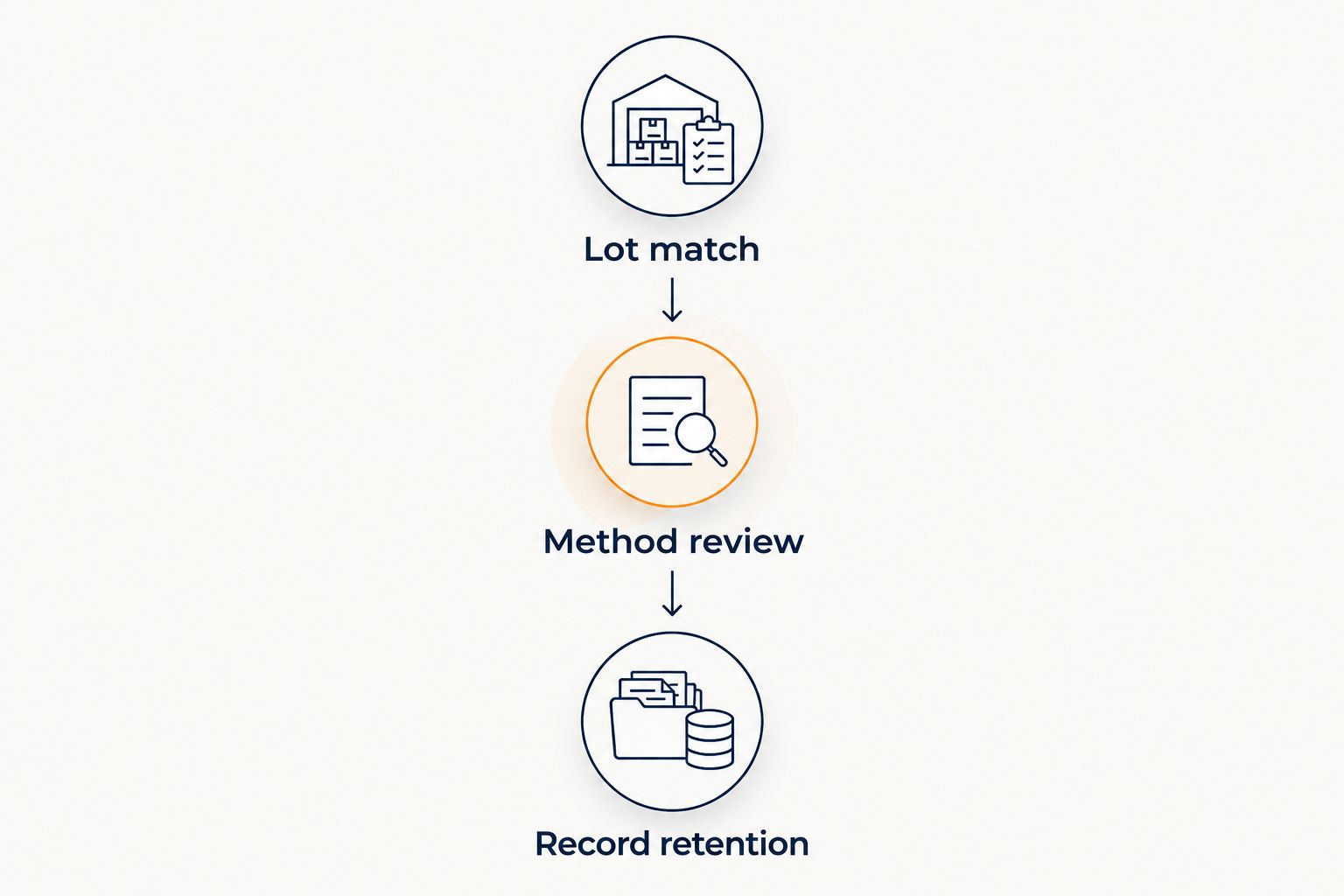
HPLC and mass spectrometry address 2 analytical questions: how components behave under the chromatographic method, and whether the mass evidence supports the proposed identity. Neither question alone covers every attribute a laboratory might require.
Start with 1 lot identifier that connects the material, certificate, and inventory entry. If those records disagree, resolve the discrepancy before acceptance rather than selecting whichever identifier seems most plausible.
For a closer review of document provenance, use this guide to checking whether a peptide vendor's COA is authentic. Authenticity and applicability are separate checks: a genuine report can still describe a different lot.
How the ranking works
This 2026 ranking orders evidence packages by their usefulness for a defensible laboratory purchasing decision. It does not report head-to-head testing, measured supplier performance, or experimental outcomes.
Lot-linked HPLC and mass-spec documentation ranks first as the default review package. Independent verification occupies a separate use case because it answers a need for additional confirmation, not because every purchase requires another test.
HPLC-only material remains a screening candidate. Generic documentation does not support final lot acceptance. Apply these distinctions equally to Strandaminos research peptides and every other supplier under consideration.
Which SS-31 research peptides should you choose?
Choose the SS-31 candidate whose lot-linked evidence satisfies your protocol—not the candidate with the strongest promotional claim. The default is a complete, interpretable HPLC and mass-spec package, followed by any additional checks your laboratory requires.
Use independent verification when your acceptance process calls for it or when a discrepancy needs investigation. Hold HPLC-only candidates pending the required identity evidence, and reject unresolved lot mismatches.
When reviewing Strandaminos, apply the same product-specific standard. Published third-party peptide certificates are relevant supplier information; the purchasing decision still rests on the documentation for the material you are evaluating.
FAQ
What's the best way to compare SS-31 research peptides in 2026?
Compare lot-linked evidence against your laboratory's acceptance criteria. Review HPLC documentation, mass-spec identity evidence, report traceability, and any additional attributes required by the protocol.
Does an HPLC report prove that a sample is SS-31?
No. HPLC describes chromatographic behavior under a specified method; molecular identity requires appropriate supporting evidence, and a prominent peak alone is not identification.
Is mass spectrometry better than HPLC for SS-31?
Mass spectrometry and HPLC answer different analytical questions. Mass spectrometry supplies molecular-mass evidence, while HPLC provides separation information; a useful review considers both rather than treating them as interchangeable.
What should match between an SS-31 vial and its COA?
The lot identifier should reconcile across the material, certificate, and laboratory records. Also check that the sample description refers to the material being evaluated and investigate discrepancies before acceptance.
Does a peptide COA establish sterility or endotoxin status?
A COA establishes only the attributes addressed by its documented tests. Do not infer sterility or endotoxin status from HPLC and mass-spec results when those attributes were not separately evaluated.
Should a laboratory independently verify an SS-31 sample?
Use independent verification when your laboratory's acceptance requirements or an unresolved discrepancy call for it. Define the analytical question, acceptance criteria, and sample traceability before commissioning the work.
Can research-use SS-31 be used in people or animals?
This guide does not support human or veterinary use. Research use only. Not for human or veterinary use; laboratory documentation does not establish safety or efficacy for administration.
One last thing
A genuine certificate can still be the wrong certificate. Authenticity establishes that a report is real; lot matching establishes whether it is relevant to the material on your bench.
Make both checks part of your 2026 acceptance process. A technically detailed report should never bypass the simple question: does this document describe this lot?


